In short: Smart radiator valves (TRVs) control each room, but they can't turn the boiler on. For a complete system you need three things: something to measure each room, something to open or close the heat to it, and a relay or receiver that tells the boiler when any room wants heat.
Who this guide is for
- You have a boiler and radiators and want room-by-room control.
- You want your hub to switch the boiler, underfloor heating or electric heaters.
- You're an installer planning zones for a customer.
How do smart heating systems work?
Most UK homes have wet central heating: a boiler heats water and a pump sends it round the radiators. A timer and one wall thermostat decide when the boiler runs. Every room gets heat at the same times, whether it is in use or not.
Smart heating splits that job into parts that talk to each other through your hub:
- Measuring. A thermostat, a TRV or a small temperature sensor reports how warm each room is.
- Room control. A smart TRV opens or closes one radiator. For underfloor heating, a thermostat opens or closes one floor loop.
- Heat source control. A relay or receiver wired to the boiler switches it on when a room asks for heat, and off when none do.
- The hub. It holds the schedules, joins everything up and gives you the app.
Why smart TRVs alone don't fire the boiler
A TRV is only a valve. It lets hot water into a radiator or shuts it out. It has no connection to the boiler.
If the boiler's timer is off and a TRV opens, the room stays cold. If the timer is on and every TRV is shut, the boiler and pump keep running with nowhere to send the heat. That wastes gas and wears the boiler.
The fix is called boiler interlock: wiring that makes sure the boiler runs only when something needs heat. Building Regulations guidance in England (Approved Document L) expects it on boiler systems. In a smart home, the hub and a boiler relay can give the same effect. The hub watches every TRV and thermostat and switches the relay to match. This depends on the hub and its radio links working, so keep a fallback (see below).
- A room drops below targetThe TRV or thermostat reports it to the hub and opens its valve.
- The hub calls for heatIt switches the boiler relay on. One room asking is enough. Hot water flows only to radiators with open valves.
- The last room reaches targetIts valve closes and the hub switches the boiler off.
If you don't want to wire anything to the boiler yet, you can still fit smart TRVs. Leave your existing timer and wall thermostat in charge of the boiler, and the TRVs will trim each room while it runs. You get room schedules, but not full demand control.
Smart radiator valves (TRVs)
A smart TRV replaces the head of an ordinary thermostatic radiator valve. A small motor pushes the valve pin in and out. It runs on batteries and joins your hub by Zigbee, Z-Wave or Matter.
If your radiators already have thermostatic valves, fitting is usually a hand job: unscrew the old head, screw on the new one, with no draining. Most valve bodies use an M30 x 1.5 thread and many TRVs include adapters for other types. Check the product page against your valves.
If a radiator has only a plain on/off valve, a plumber needs to fit a thermostatic valve body first.

Things to check
- Where the temperature is measured. A TRV sits next to a hot radiator, so its reading runs high. Many let you add an offset or use a separate room sensor. A sensor where you sit gives better comfort.
- Leave one radiator uncontrolled. Don't fit a TRV in the room that has the wall thermostat. Your installer may also have left a radiator or bypass valve open so the pump always has a path. Keep it that way.
- Response time. Battery TRVs sleep to save power and wake at intervals. A change from the app can take a few minutes to arrive.
- Mounting. Check there is room for the head and that you can read the display once fitted.
Thermostats and room sensors
A smart thermostat measures the room and lets you set a target on the wall as well as in the app. There are three common kinds:
Battery wall thermostat
Goes anywhere, no wiring. It reports temperature and target to the hub, which switches the boiler or valves.
Mains thermostat with relay
Replaces a wired thermostat and switches the heating itself. Common for underfloor heating and electric heaters.
Temperature sensor
No buttons or display. A low-cost way to give the hub an accurate reading in each room.
If the hub is doing the thinking, the thermostat can be simple. Pay for a display and buttons only in the rooms where people will use them.
Zigbee and Z-Wave boiler control
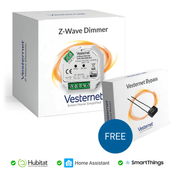
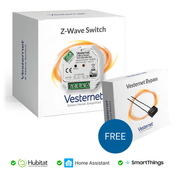
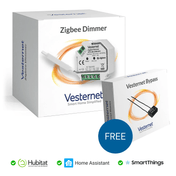
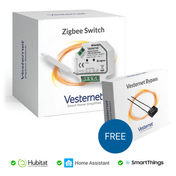
To switch a boiler from your hub you need a relay or receiver. It takes the place of the switching contacts in your old wall thermostat or timer.
- Volt-free contacts. Many boilers want a simple open or closed contact with no voltage of its own, often called volt-free, dry or potential-free. Others want a switched 230V live. Your boiler manual says which. The relay must match.
- Any protocol works. A Zigbee relay, a Z-Wave relay or a thermostat with a built-in relay can all do the job, as long as the contact type and rating suit the boiler.
- Keep a fallback. Leave the boiler's own controls and frost protection working. Choose a relay that can switch itself off after a set time, so a hub fault can't leave the heating on for days.
Safety: boiler and mains wiring must be done by a competent person and comply with local regulations. If the connection is inside the boiler casing, use a Gas Safe registered engineer.
Which boiler system do you have?
Combi boiler
Heats hot water on demand. Needs one switched channel, for heating only.
Boiler with a hot water cylinder (S-plan)
Two motorised valves, one for heating and one for hot water. Needs two channels. More valves can be added for extra heating zones.
Boiler with a hot water cylinder (Y-plan)
One three-way valve shares heat between radiators and cylinder. Heating and hot water are still controlled separately. Check the valve's wiring diagram, or ask a heating engineer, before choosing a relay.
With a hot water cylinder, keep the cylinder thermostat in the circuit. It stops the water overheating and is not something to replace with a schedule alone.
Which control method suits your home?
| Method | What it controls | Good for | Watch out for |
|---|---|---|---|
| Smart TRVs only | Each radiator | A quick start with no wiring | The boiler still follows its old timer |
| Smart thermostat and boiler relay | The whole house as one zone | Phone control and better schedules | Every room heats together |
| Smart TRVs and boiler relay | Each room, with the boiler on demand | Full zoning on radiators | Needs a hub and boiler wiring |
| Underfloor heating thermostats | Each floor loop or mat | Wet or electric underfloor heating | Slow to respond. Check load ratings |
| Thermostat or relay on electric heaters | Each heater | Panel heaters and towel rails | The device must be rated for the load |
Heating zones and schedules
A zone is a part of the house that is heated to its own target at its own times. With a smart TRV on each radiator, every room can be a zone.
Some tips for schedules that work:
- Set back, don't switch off. Dropping a room by a few degrees when it is empty saves energy and lets it recover quickly. Rooms left fully cold take a long time to warm and can get damp.
- Start with times, then add presence. Get a simple weekday and weekend schedule right first. Then add rules such as "everyone has left, set back the whole house".
- Group small rooms. A landing or a small toilet rarely needs its own schedule.
Larger homes are sometimes split with motorised zone valves, for example upstairs and downstairs. The wiring for this is covered in our application note Creating heating zones.
Open-window detection
Heating a room with the window open wastes energy. There are two ways to stop it:
- Built into the TRV. Many smart TRVs notice a sudden drop in temperature and close for a while. It needs no extra parts, but it reacts slowly and can miss a window that is only ajar.
- A door and window sensor. A contact sensor on the window tells the hub at once. The hub sets the room back and restores it when the window shuts. This is quicker and more reliable.
Underfloor heating and electric heating
Wet underfloor heating
Warm water runs through loops of pipe in the floor. Each loop has a small actuator on the manifold, and a thermostat in each zone opens it. To make it smart, replace each zone thermostat with a smart one that can switch the actuator, or fit a multi-channel heating controller at the manifold and use wireless thermostats or sensors in the rooms. The boiler or heat pump still needs a call for heat when any zone opens.
Floors warm and cool slowly, often over hours. Use steady targets and small set-backs, not short bursts.
Electric underfloor heating
A thermostat switches the heating mat directly and normally uses a probe in the floor to protect the floor finish. Choose a smart thermostat that supports a floor sensor and is rated for the mat's load. Large mats may need a contactor. Keep the floor temperature limit in place.
Panel heaters and towel rails
These are switched by a thermostat with a relay, or by a relay module paired with a room sensor. Heaters draw a lot of current for long periods, so the rating matters. Choose a device rated above the heater's load, not right at its limit. For plug-in heaters, read our advice on smart plug ratings in Choosing smart plugs and sockets first.
Heat pumps
Heat pumps work best running steadily at low temperatures under their own controls. Smart sensors and gentle room trimming are fine, but ask your installer before adding anything that shuts off many rooms at once.
Zigbee, Z-Wave, Matter or Wi-Fi?
Zigbee
A wide choice of TRVs, sensors and relays. Needs mains-powered Zigbee devices around the house to carry signals to radiators in far rooms.
Z-Wave
Strong range through walls on 868 MHz in the UK and Europe. Good choice of wall thermostats, underfloor controllers and TRVs.
Matter
Newer radiator valves work with Apple, Google, Amazon and SmartThings as well as hubs. Most use Thread and need a Thread border router.
Wi-Fi
No hub needed for a few mains devices. Less suited to battery TRVs and often tied to the maker's cloud.
You can mix them if your hub has both radios. A hub with Zigbee and Z-Wave can run Zigbee TRVs with a Z-Wave thermostat on the same schedule. Not every hub has both. Check which radios yours has and that it supports the heating device you want: see Choosing a smart home controller and Will it work with my system?
 Smart TRVBattery valve head for one radiator
 TRV with displayShows and sets the target at the radiator
 Wall thermostat with relayMeasures the room and switches the heating
 Underfloor thermostatWorks with a floor sensor
 Heating controllerSwitches several water-based zones
Common questions
Does turning off radiators save money?
Not heating rooms you aren't using reduces the heat your home needs, so yes. Doing it by hand is a chore, which is where smart TRVs help. Set unused rooms back by a few degrees and keep internal doors shut.
Can I control my heating from my phone or by voice?
Yes. Your hub's app shows every room and lets you change targets and schedules from anywhere. Link the hub to Alexa, Google Home or Apple Home for voice control.
How hard is it to install?
Swapping TRV heads and placing battery sensors is a DIY job. Boiler relays, mains thermostats and underfloor heating controls involve mains wiring and need a competent person.
What happens if the hub or internet goes down?
TRVs and thermostats keep holding their last target. Hubs that run locally carry on with schedules without the internet. This is why the boiler should keep its own frost protection and a fallback.
What you'll need
 TRVsOne for each radiator you want to control
 ThermostatsWall thermostats and underfloor controls
 All heatingControllers, valves and thermostats
 ControllersThe hub that runs the schedules
- Smart radiator valves
- Smart thermostats
- Temperature sensors and door and window sensors
- Relay modules for boiler and zone switching (check the contact type and rating)