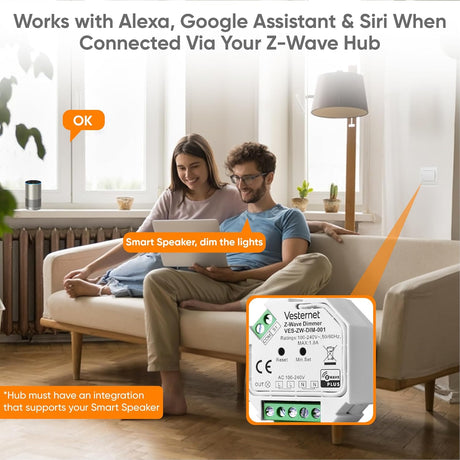
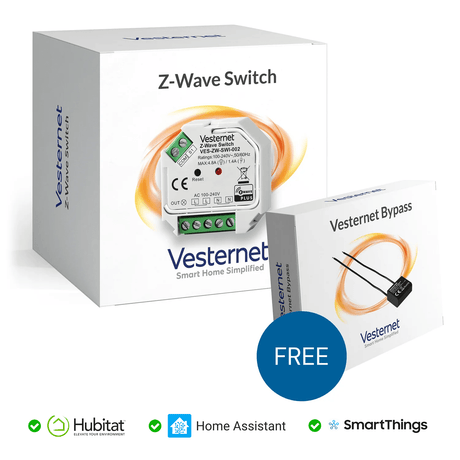
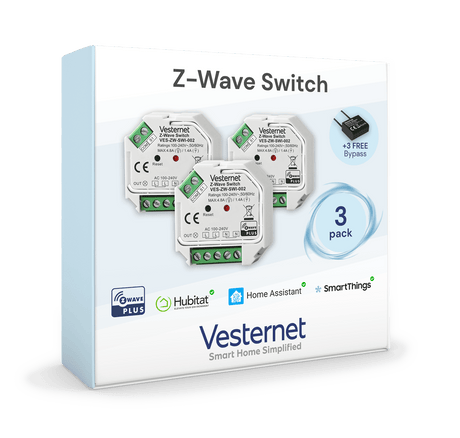
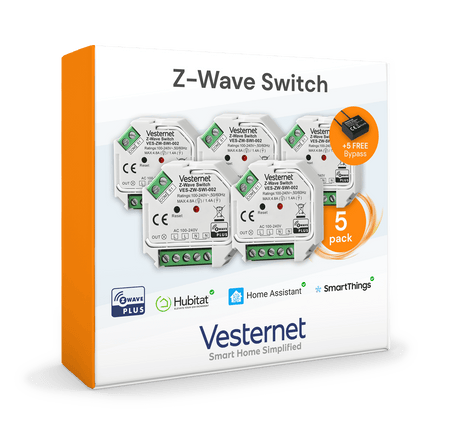
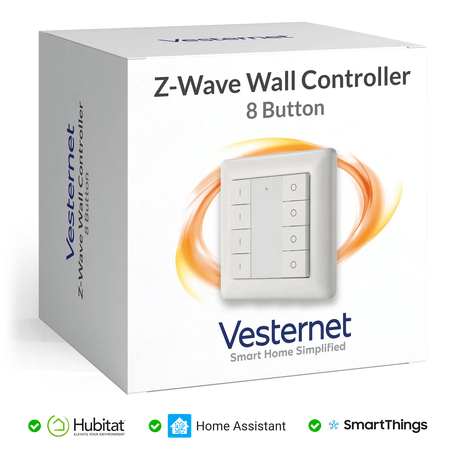
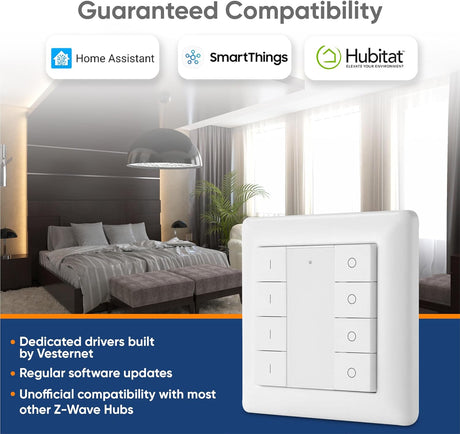
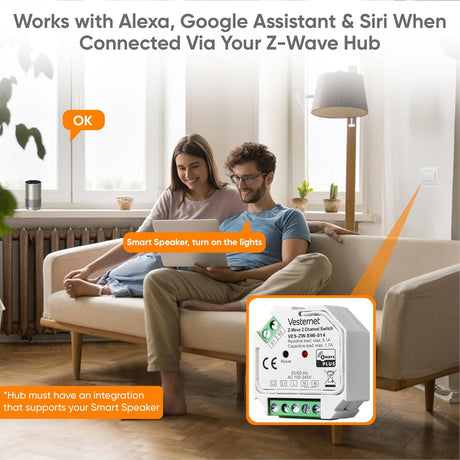
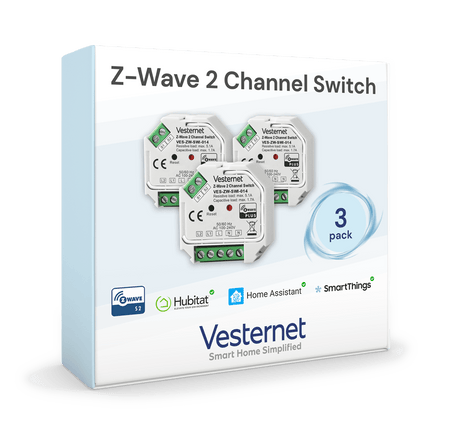
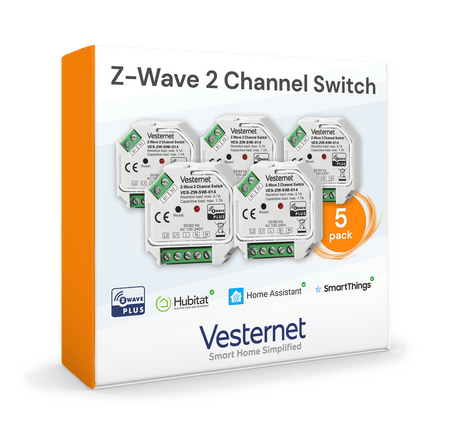
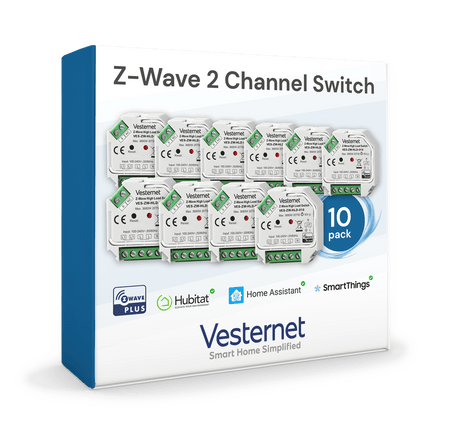
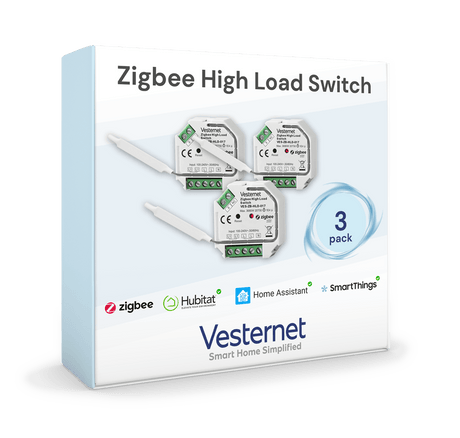
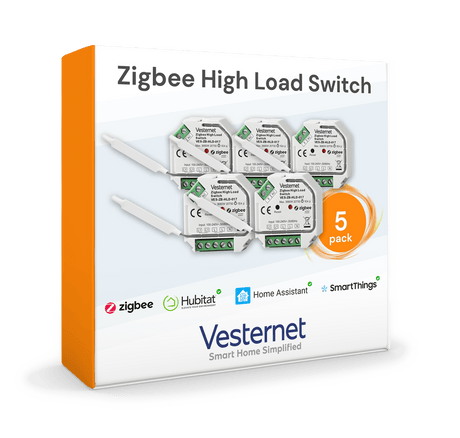
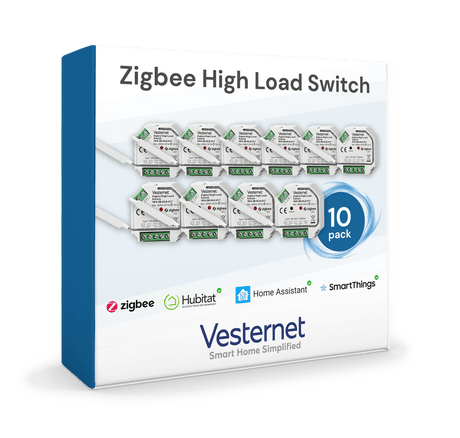
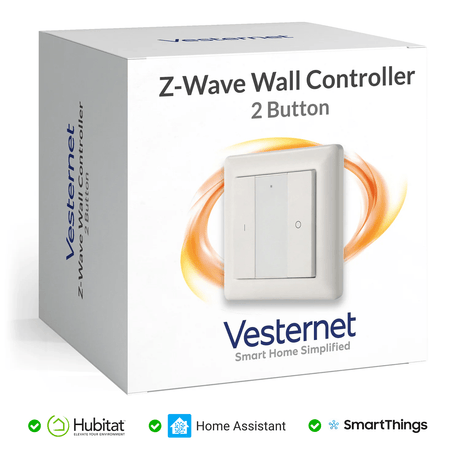
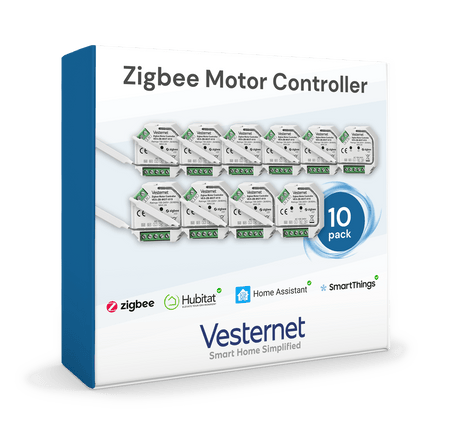
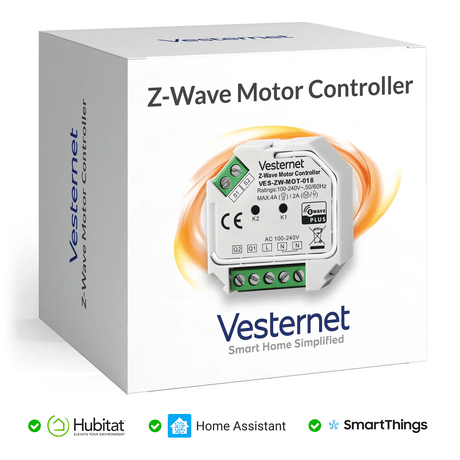
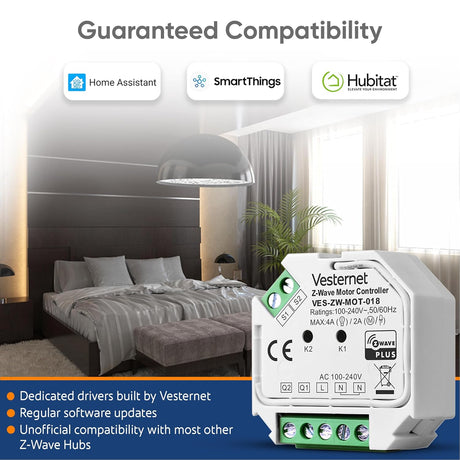
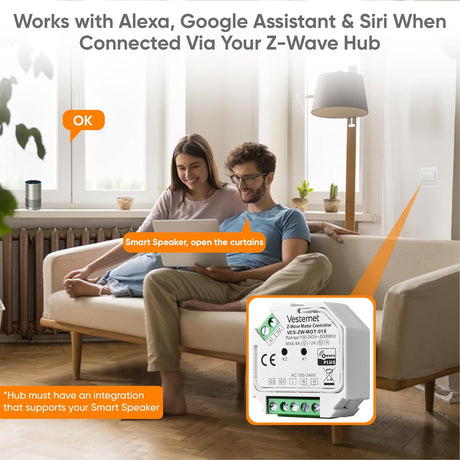
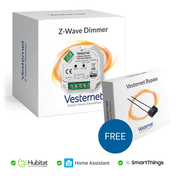
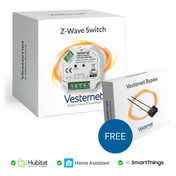
Smart Z-Wave Lighting Controller with Long-Range Connectivity
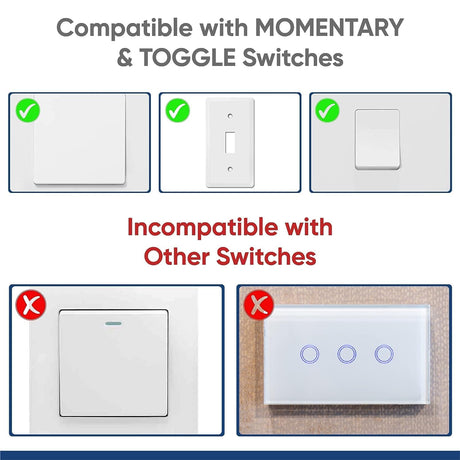
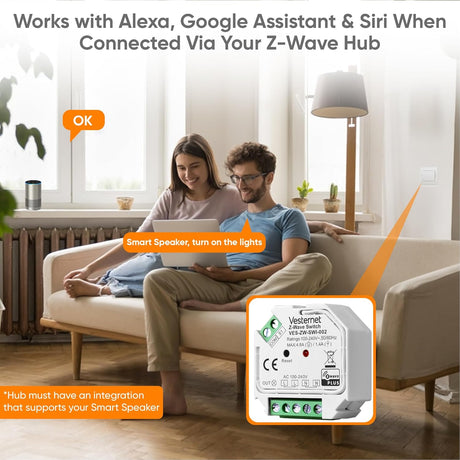
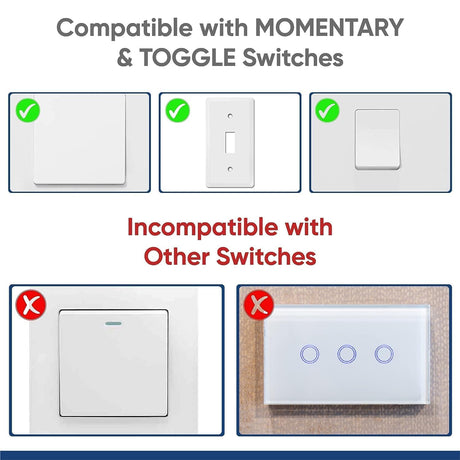
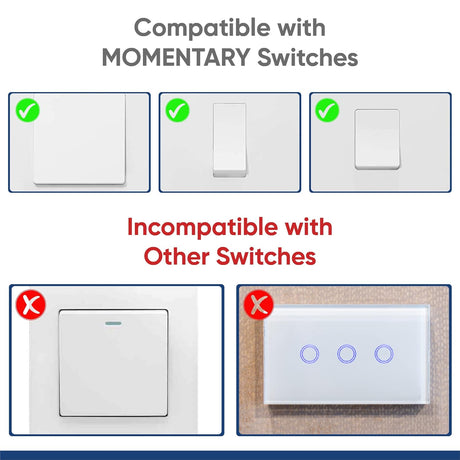
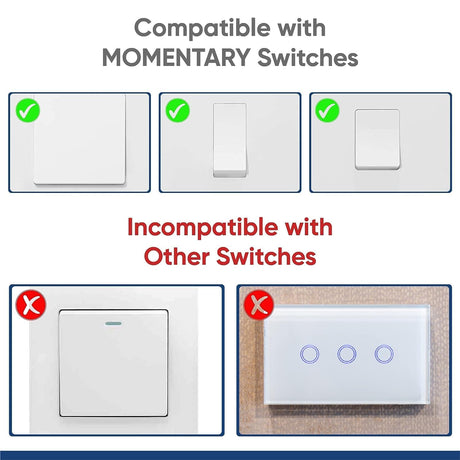
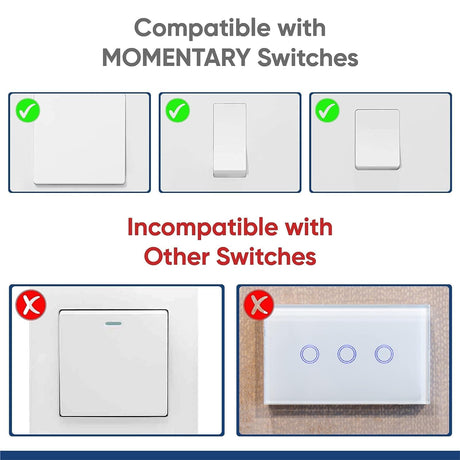
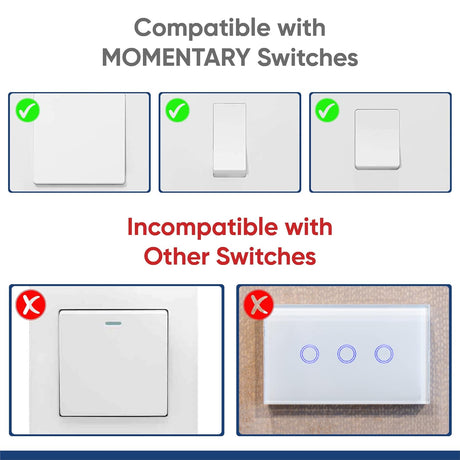
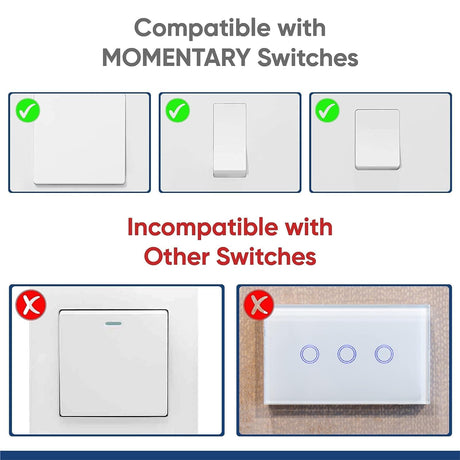
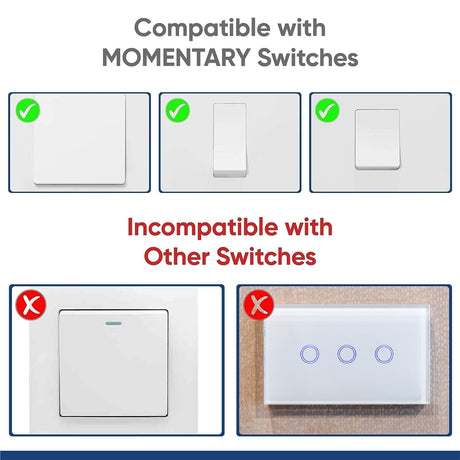
Firmware updates may be required, and some features might not be available on your hub. This device provides on/off Z-Wave control for 100–240 V lights up to 5 A, a dry contact switch for wall control (no voltage on input), and supports SmartStart, S2 security, scene control, smart bulb mode, and quality LED bulbs. It features a Z-Wave 800 Series chip with Long Range, a multicolor LED indicator, and a built-in signal repeater. Requires a Z-Wave hub (sold separately) and includes a 5-year warranty with lifetime tech support.

Smart Z-Wave Lighting Control
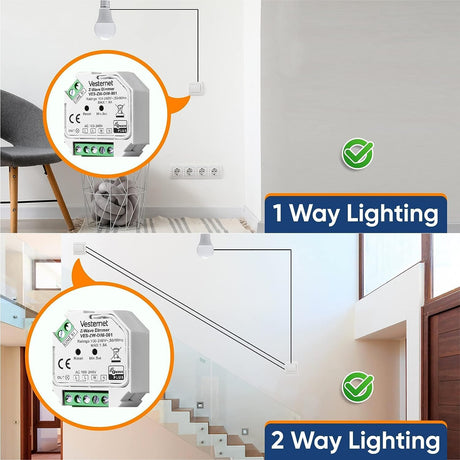
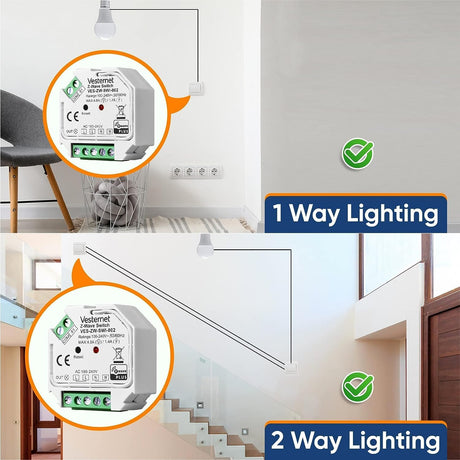
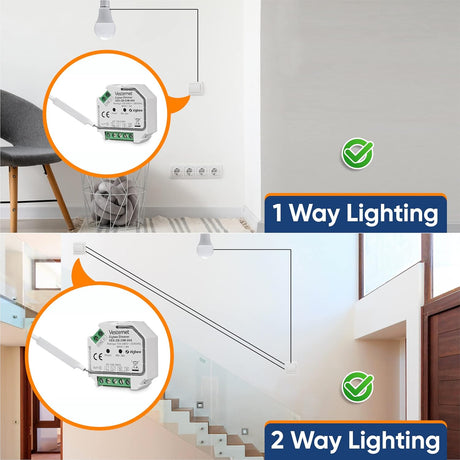
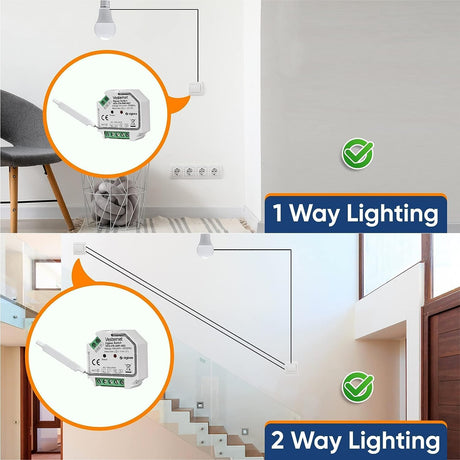
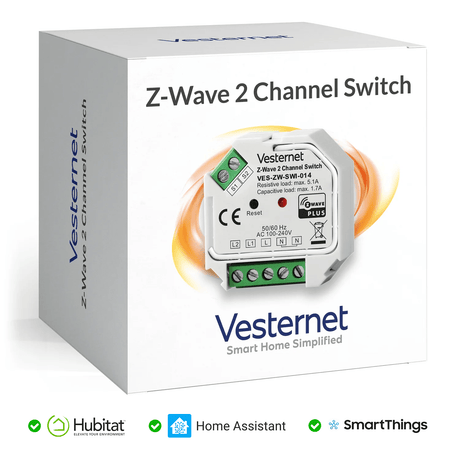
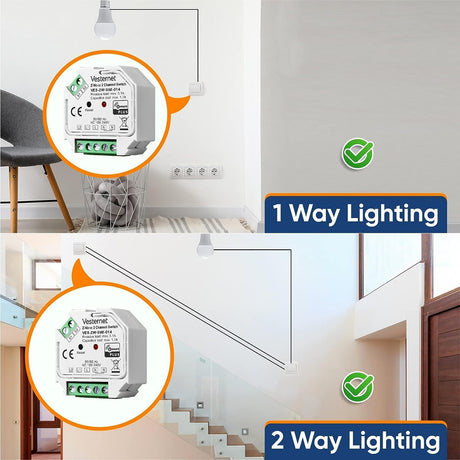
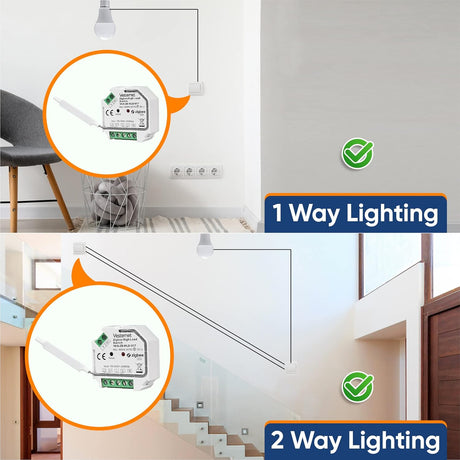
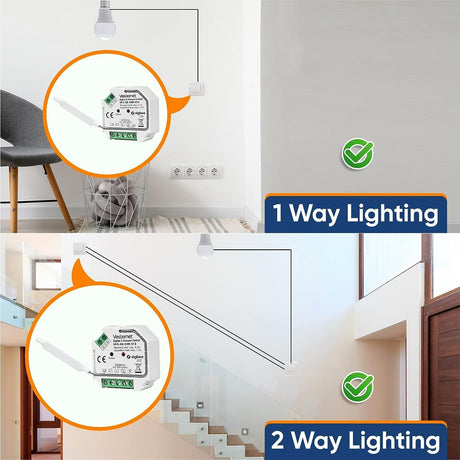
Add Z-Wave control to 120 V (or 240 V in Europe) lighting for convenient, energy-efficient, and secure automation. This compact relay supports on/off wireless and wall switch control for lights up to 5 Amps (about 500 W for incandescent or 150 W for LED bulbs) and is not suitable for large appliances, fans, motors, or switched outlets. It can be installed behind your existing wall switch to retain its style or at the light fixture if no neutral wire is available, offering a reliable alternative to cloud-dependent smart bulbs.

Compact Z-Wave XS Relay with Long-Range Connectivity
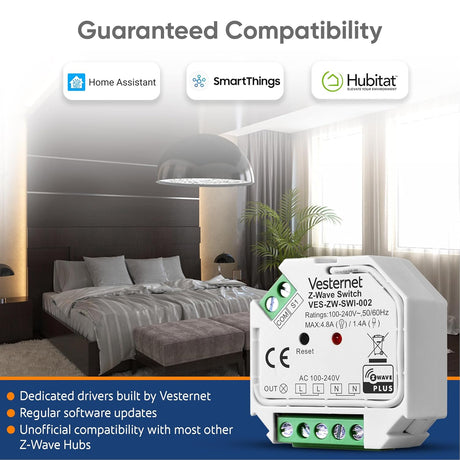
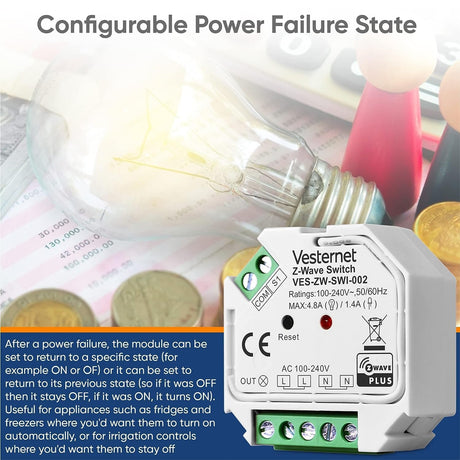
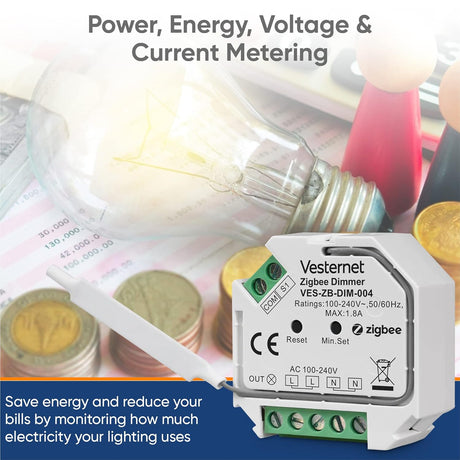
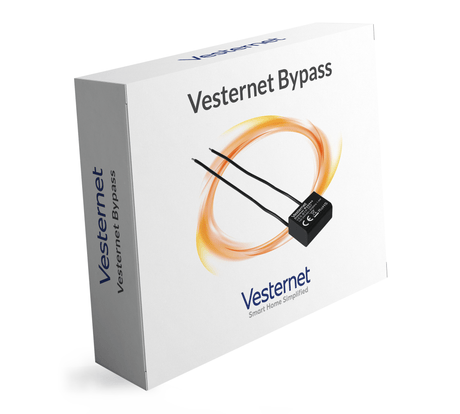
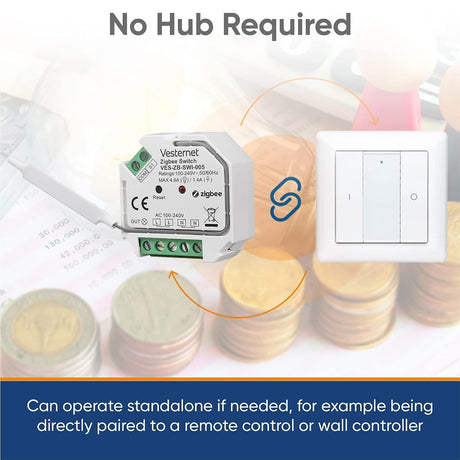
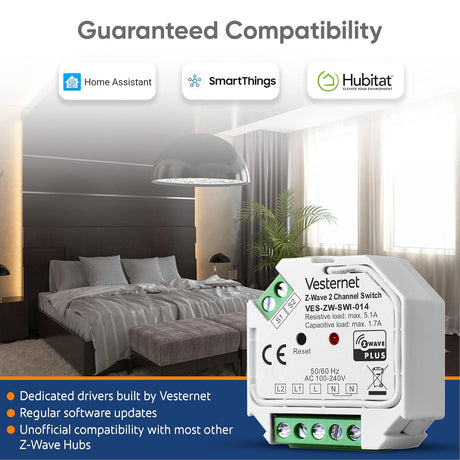
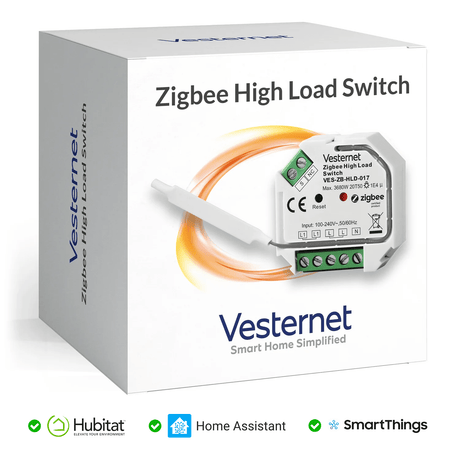
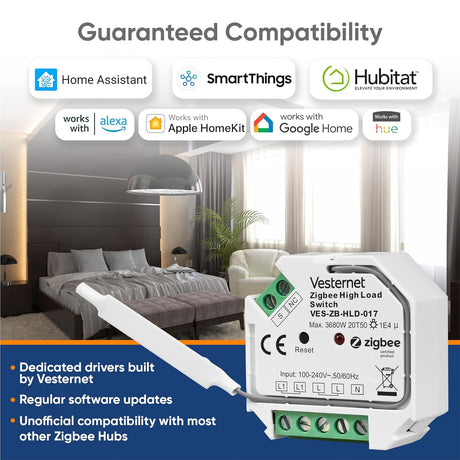
The XS Relay offers compact, reliable Z-Wave control with secure wiring terminals and an 800 Series chip for fast, efficient connectivity. Its small size fits tight installations, and the built-in Z-Wave button allows load control, hub pairing, or factory reset. Pigtail wires enable dry contact switch connections (no voltage), while a multi-color LED indicates status and troubleshooting. Long Range Z-Wave ensures stable performance even in challenging environments.

Wiring and Installation Guidelines
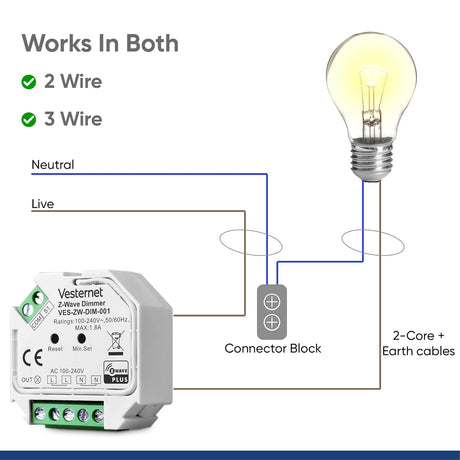
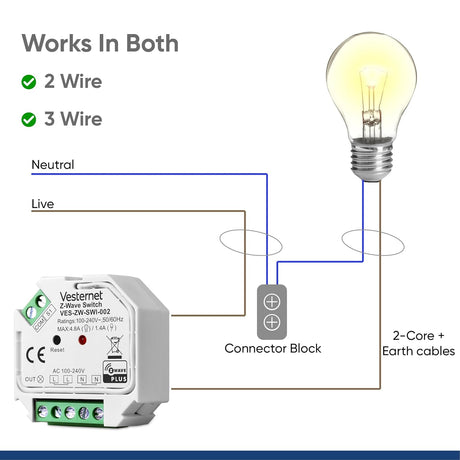
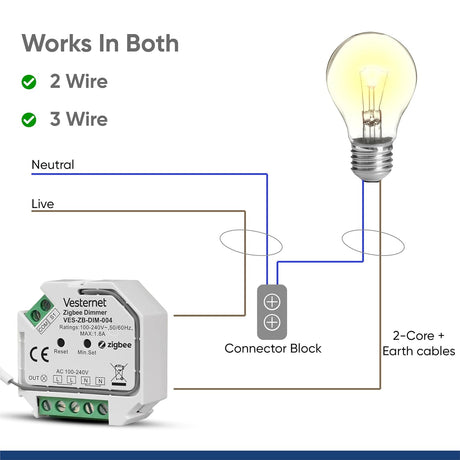
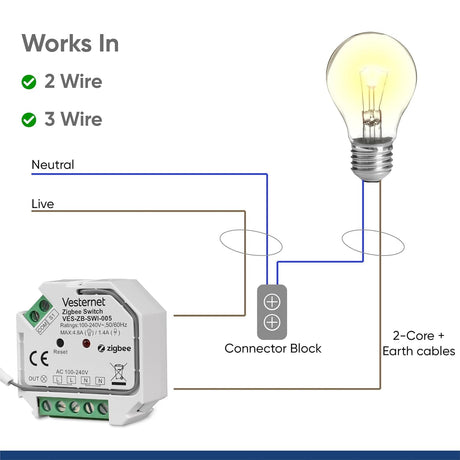
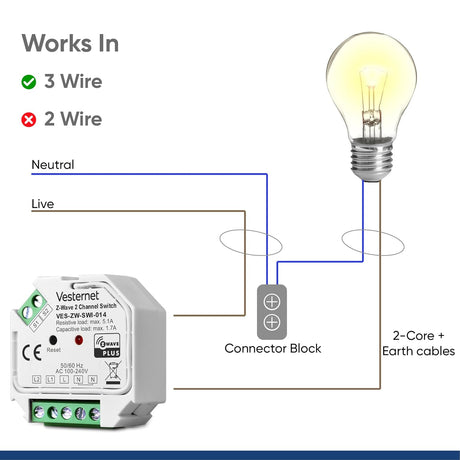
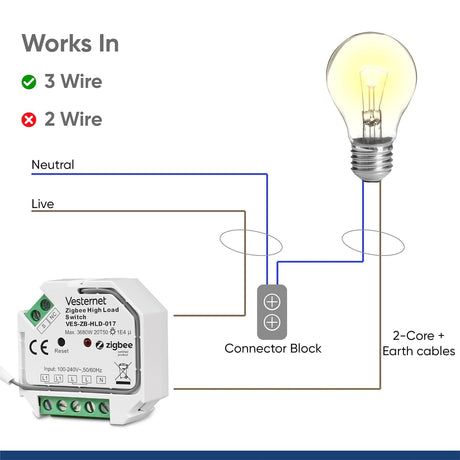
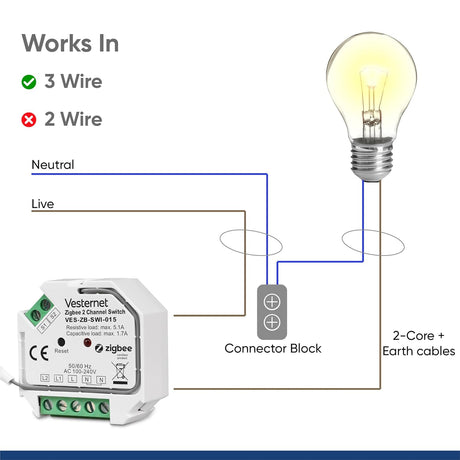
Before installation, ensure the total load does not exceed the specified wattage and that your gang box has all required wires: load (usually black), line (usually black), neutral (usually white), and ground (usually green). If unsure about wiring or installation, hire a licensed electrician. For 120 V setups, a neutral wire is required in the gang box; without it, the relay must be installed at the fixture. Do not use wires larger than 14 AWG, and connect all wires exactly as indicated—line and load (OUT) must never be swapped.