In short: Smart smoke, heat, carbon monoxide and water leak sensors do what ordinary ones do, and also tell your hub. Your home can then notify your phone, switch lights on, sound sirens and close the water supply. A smart alarm adds to the alarms your home must have by law or building regulations. It does not replace them.
Who this guide is for
- You want to know if the smoke alarm goes off, or a pipe leaks, while you are out.
- You're planning what should happen automatically in an emergency.
- You're an installer adding safety sensors to a smart home system.
What does a smart alarm add?
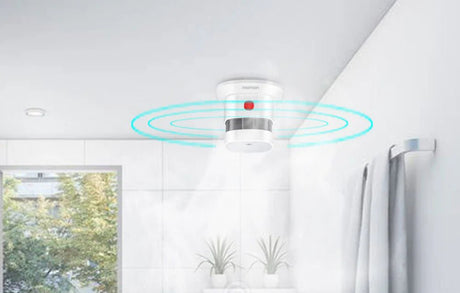
An ordinary smoke alarm makes a loud noise. That works if someone is at home, awake and able to hear it. A smart alarm makes the same noise and also reports to your hub by Z-Wave, Zigbee or Matter. From there your home can respond:
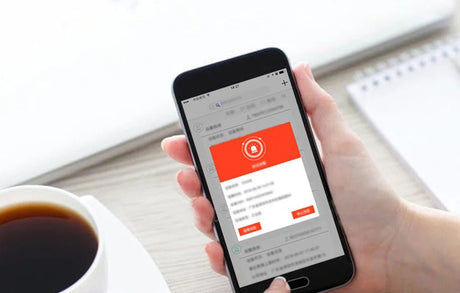
- Tell you wherever you are. A phone notification that names the room.
- Make it obvious at home. Lights on at full brightness, sirens in other rooms, a spoken message on a speaker.
- Limit the damage. Close the water valve on a leak. Switch off a ventilation system on smoke so it does not spread it.
- Look after itself. Low battery and fault reports go to your phone, not just a chirp at 3 am.
Ordinary alarm
- Sounds where it is fitted
- Nobody knows if the house is empty
- Low battery chirp only
- May interlink with others of the same range
Smart alarm
- Sounds where it is fitted
- Notifies your phone and the hub
- Battery level and faults shown in your app
- Triggers lights, sirens and valves through your hub
Does a smart smoke alarm meet UK regulations?
Treat smart alarms as an extra layer. Keep, or fit, the alarms your home is required to have, then add smart sensors for notifications and automation. An automation that runs through a hub, an app or the internet is not a substitute for a required alarm or for required interlinking.
The rules depend on where you live and whether the home is new, altered or rented. This is a summary, not legal advice. Check the current official guidance, or ask your local building control or fire and rescue service.
- New homes and some building work in England. The guidance to the Building Regulations (Approved Document B) calls for a fire alarm system to at least Grade D2, Category LD3 of the British Standard for home fire alarm systems (BS 5839-6). The smoke and heat alarms are mains powered, with a standby power supply. A stick-on battery smart alarm does not meet this.
- Rented homes in England. Landlords must provide a smoke alarm on every storey used as living accommodation, and a carbon monoxide alarm in any room with a fixed combustion appliance (gas cookers excepted).
- Every home in Scotland. The law requires interlinked alarms: a smoke alarm in the living room and in every hallway and landing, and a heat alarm in the kitchen, all on the ceiling. A CO alarm is needed in any room with a carbon-fuelled appliance such as a boiler, fire or stove.
- Wales and Northern Ireland have their own rules, including for rented homes.
Whatever you fit, look for the product standard on the alarm: BS EN 14604 for smoke alarms, BS 5446-2 for heat alarms and BS EN 50291 for CO alarms. Check the standards listed on the product page before you buy.
Some smart alarms are certified alarms in their own right. Others work through a small interface that links a conventional interlinked alarm system to your hub, which keeps the required system intact and adds the smart features on top.
Smoke, heat and carbon monoxide alarms
Three different sensors do three different jobs:
| Alarm | Detects | Use it in | Avoid |
|---|---|---|---|
| Smoke (optical) | Smoke particles in the air | Halls, landings, living rooms, bedrooms | Kitchens and bathrooms, where steam and cooking cause false alarms |
| Heat | A high or fast-rising temperature | Kitchens, garages, lofts | Using it instead of a smoke alarm elsewhere. It reacts later. |
| Carbon monoxide (CO) | CO gas from fuel that is not burning fully | Rooms with a boiler, fire, stove or flue | Right beside the appliance, or in damp, steamy spots |
Carbon monoxide has no smell, taste or colour. It comes from faulty or poorly ventilated gas, oil, wood and coal appliances. A smoke alarm will not detect it. If you burn any fuel at home, you need a CO alarm as well.
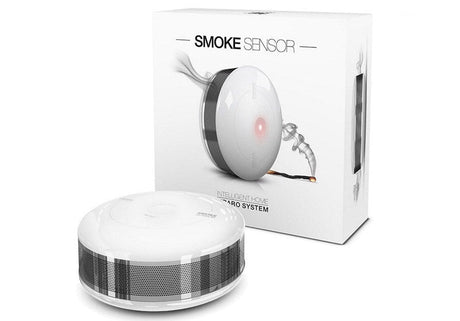
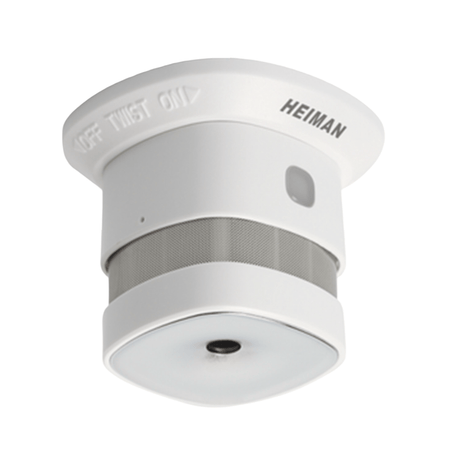
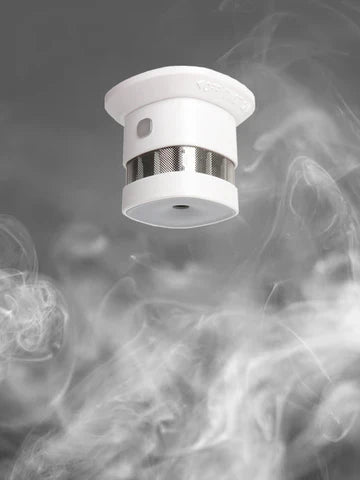
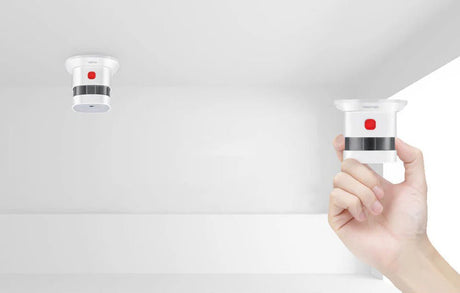
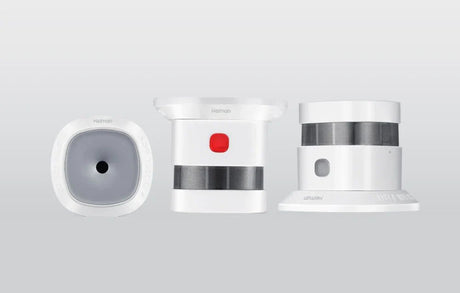
 Smart smoke sensorSounds locally and reports to your hub
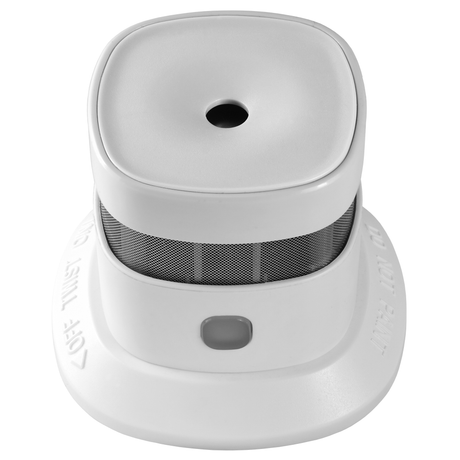
 Smoke alarm with sirenCeiling mounted, for halls and landings
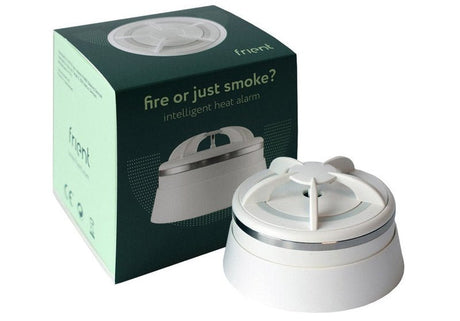
 Heat alarmFor kitchens, where smoke alarms false trigger
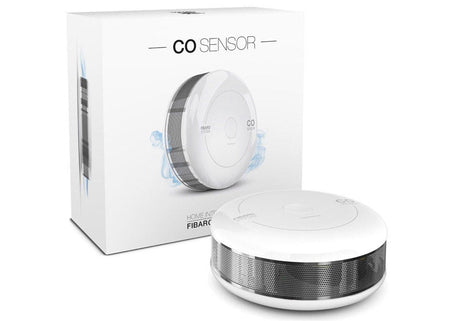
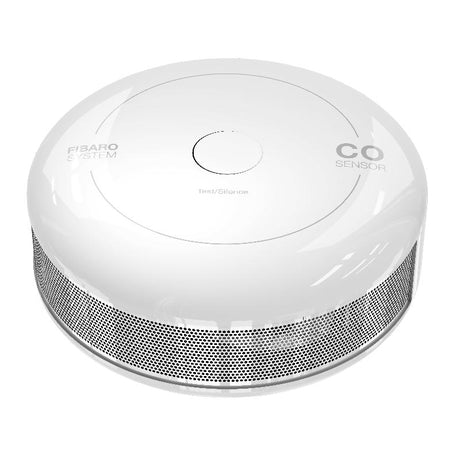
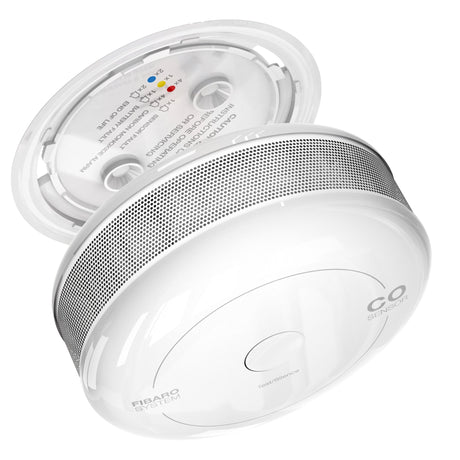
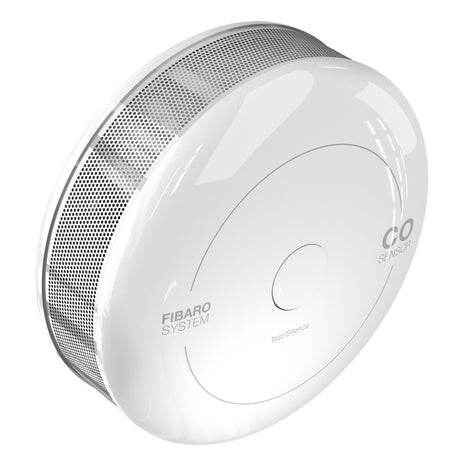
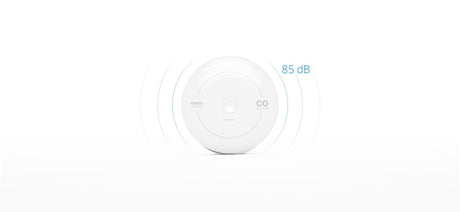
 Carbon monoxide sensorFor rooms with a boiler, fire or stove
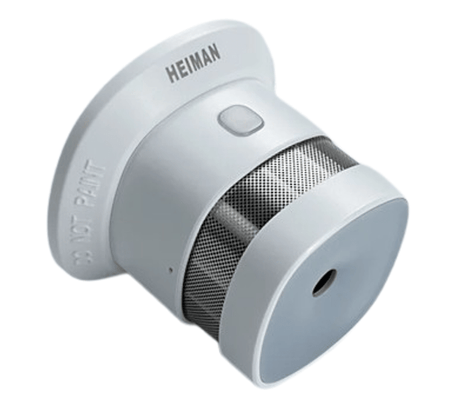
 Matter smoke sensorCheck your platform supports smoke alarms over Matter
What is interlinking?
Interlinked alarms all sound when any one of them detects something, so a fire in the kitchen wakes someone in a top-floor bedroom. Alarms are interlinked by a wire or by their own radio link, and they keep working if your broadband, hub or power is down.
Your hub can do something similar: "if any smoke sensor triggers, sound every siren". That is useful, but it depends on the hub running. Use it on top of interlinked alarms, never as the only link between them.
Where should alarms and sensors go?
- Smoke alarms: on the ceiling, as near the middle of the room or hallway as you can, and at least 300 mm from walls and light fittings. Start with every hall and landing, then the living room, then bedrooms.
- Heat alarm: on the kitchen ceiling.
- CO alarms: in the same room as the boiler, fire or stove, 1 to 3 metres from it. Add one in a bedroom that a flue passes through.
- Leak sensors: flat on the floor under the sink, behind the washing machine and dishwasher, by the hot water cylinder, beside toilets and baths, and under any tank in the loft.
- Sirens: where they will be heard, such as the hall or landing. One near bedrooms matters most at night.
The manufacturer's instructions come first. Follow the distances and heights given for your alarm.
Water leak sensors and shut-off valves
A leak sensor has metal contacts on its underside. When water bridges them it reports a leak within seconds. Small leaks do the most damage when nobody notices them, behind an appliance or while you are away, so the value is in the early warning.
Some sensors have a probe on a lead for tight gaps. Many also report temperature, which gives you a frost warning for pipes in a loft, garage or holiday home.
A sensor only tells you. To stop the water you need a smart shut-off valve on the supply.

 Floor leak sensorBattery powered, no fitting needed
 Leak sensor with probeReaches under baths and behind appliances
 Compact leak sensorSmall enough for any cupboard
 Valve controllerTurns an existing lever valve off for you
Smart shut-off valves
There are two kinds:
- A valve controller is a motor that clamps over an existing quarter-turn lever valve and turns the handle. No pipework is cut. It needs a lever valve in good condition that turns freely.
- An inline valve is fitted into the pipe itself. This is a job for a competent plumber, and any mains connection for the valve must be made by a competent person in line with local regulations.
Fit the valve just after your main stop tap so it protects the whole house. Check the pipe size, and that there is a socket or a battery option. Choose a valve you can still turn by hand in a power cut.
What should happen automatically?
Here is what happens when a leak is detected in a well set-up home:
Never automate reopening the valve. Find and fix the leak, then open it by hand or from the app.
Many Z-Wave and Zigbee sensors can also be linked directly to a valve or siren (called association or binding), so the pair still works if the hub is offline. Check both product pages to see if this is supported.
Smoke, heat and CO
| Event | Useful automatic actions | Do not |
|---|---|---|
| Smoke or heat alarm | All lights on full. Sirens on. Notify every phone with the room name. Stop ventilation fans. Unlock a smart lock only if you have planned for it and only when someone is home. | Rely on it to wake people. The alarms themselves must do that. |
| CO alarm | Lights on. Sirens on. Notify every phone. | Stay inside to investigate. Get out first. If you have gas, then call the gas emergency number below. |
| Leak sensor | Close the valve. Siren. Notify. Cut power to a smart plug feeding the washing machine. | Reopen the valve automatically. |
| Low battery or sensor offline | Notify you once a day until it is fixed. | Ignore it. A silent sensor protects nothing. |
If a CO alarm sounds: open doors and windows, turn off the appliance if it is safe to, and leave the building. If you have gas, call the gas emergency number: 0800 111 999 in England, Scotland and Wales, or 0800 002 001 in Northern Ireland. That line is for gas only. Whatever the fuel, do not use the appliance again until a qualified engineer has checked it. Call 999 if anyone feels unwell. In a fire, get out, stay out and call 999. No automation changes that.
Keep safety rules simple. They should run on the hub itself, without the internet, and should not depend on modes or schedules. See Automations and scenes that work.
Sirens
The sounder inside a smoke alarm is loud in that room. A smart siren carries the warning to the rest of the house, and can use a different tone for a leak than for an intruder.
- Plug-in sirens are the simplest. Many have a back-up battery, and because they are mains powered they usually strengthen your Z-Wave or Zigbee mesh too.
- Battery sirens go anywhere but need their batteries checked.
- Outdoor sirens are mainly for security, to alert neighbours.
Some smart smoke alarms can also be sounded by the hub, so they double as sirens. Check the product page. More in Security: locks, sirens and alarms.

 Plug-in sirenMains powered with battery back-up
 Indoor siren and strobeSound and flashing light together
 Outdoor sirenWeatherproof, to alert the neighbours
Testing and battery life
- Test alarms monthlyPress the test button on every smoke, heat and CO alarm. Check your hub shows the test, if your alarm reports it.
- Test the automationWet a leak sensor's contacts with a damp cloth. Watch the valve close, the siren sound and the notification arrive.
- Exercise the valveClose and open it every month or two so it does not seize.
- Act on low batteryReplace batteries as soon as the hub reports them low. Do not wait for the chirp.
- Battery life. Many smoke alarms have a sealed battery meant to last the life of the alarm. Others use replaceable batteries that last one to several years. The smart radio uses some power, so follow the figure on the product page and let your hub track the level.
- Replace the whole alarm on time. Smoke alarms are normally replaced after ten years. CO sensors wear out too, often sooner. The replace-by date is printed on the alarm.
- Test after changes. Run through your safety automations after a hub update, after moving to a new hub and after changing your notification settings.
- Keep leak sensors clean and flat. Corroded contacts or a sensor knocked on its side will not detect water.
Which hubs do these work with?
Safety sensors are widely supported on Hubitat, Homey Pro, Home Assistant, the Aeotec Smart Home Hub (SmartThings) and Fibaro Home Center. Match the sensor's radio (Z-Wave, Zigbee, or Matter over Thread or Wi-Fi) to your hub, and choose a hub that runs rules locally so they still work when the internet is down. Thread sensors need a Thread border router, which may be built into your hub or be a separate device. See Choosing a smart home controller, Will it work with my system? and our guide to every sensor type, Smart home sensors.
What you'll need
- Smoke, heat and CO sensors
- Water leak sensors and shut-off valves
- Sirens
- A smart home controller to link them together