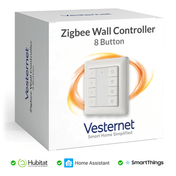
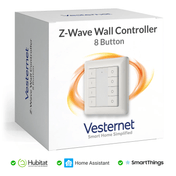
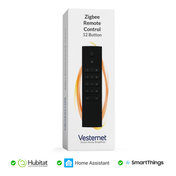
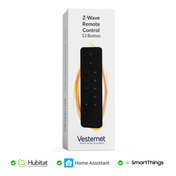
In short: Z-Wave and Zigbee are wireless languages built for smart homes, and both are mature and reliable. Matter is a newer shared standard that lets devices work across Apple, Google, Amazon and SmartThings. You don't have to pick one: most controllers run two or three side by side, so you can choose the best device for each job.
Who this guide is for
- You're starting a smart home and want to know which technology to build on.
- You already use one and are wondering whether to add another.
- You've heard Matter replaces everything and want to know if that is true.
Z-Wave vs Zigbee vs Matter at a glance
| Z-Wave | Zigbee | Matter | |
|---|---|---|---|
| Frequency | 868 MHz in the UK and Europe | 2.4 GHz | 2.4 GHz over Thread, or your Wi-Fi |
| Indoor range per hop | About 20 to 30 metres | About 10 to 20 metres | Thread is similar to Zigbee. Wi-Fi depends on your router |
| Mesh | Yes. Mains devices repeat over several hops (Silicon Labs quotes four) | Yes. Mains devices repeat, many hops | Thread: yes. Wi-Fi: no |
| Device choice | Strong on in-wall modules, heating and security | The widest choice of sensors, plugs, lighting and remotes | Growing. Strongest in plugs, lighting, sensors and heating |
| Hub needed | Yes, with a Z-Wave radio | Yes, with a Zigbee radio | A Matter controller, plus a Thread border router for Thread devices |
| Region-specific | Yes. Buy for your region | No. Same worldwide | No. Same worldwide |
Ranges are typical figures inside a house. Thick stone, concrete and foil-backed insulation reduce all of them.
What each one is
 Z-WaveLow frequency, strict certification
 ZigbeeOpen standard, huge device choice
 Matter and ThreadOne standard across the big ecosystems
Z-Wave is a wireless technology made only for smart homes. It uses a low radio frequency, every device is certified to join any Z-Wave controller of the same region, and it has been in homes for over 20 years. More in Z-Wave explained.
Zigbee is an open wireless standard used by hundreds of manufacturers. It runs at 2.4 GHz, the same frequency everywhere in the world, and has the largest range of low-cost devices. More in Zigbee explained.
Matter is different in kind. It is not a radio. It is a shared language that runs over Wi-Fi, a network cable or Thread, a low-power mesh radio similar to Zigbee. Its purpose is to let one device work with several systems. More in Matter and Thread explained.
Z-Wave vs Zigbee: what's the difference?
Both are low-power mesh networks run by a hub. Mains-powered devices pass messages on, and battery sensors last a year or more. The differences that matter in practice are frequency, device choice and how strictly each is certified.
Frequency and interference
Z-Wave uses 868 MHz in the UK and Europe. Zigbee and Thread use 2.4 GHz, the same band as Wi-Fi and Bluetooth.
- Z-Wave never competes with Wi-Fi, and its lower frequency passes through brick walls and floors more easily.
- Zigbee shares its band with Wi-Fi. In most homes this causes no trouble, and a well-chosen channel avoids it. Each hop is shorter, so a Zigbee network relies more on having mains-powered devices spread around the house.
Device choice
Zigbee has the wider range, especially for sensors, plugs, bulbs, LED controllers and battery remotes. Z-Wave has fewer products but is particularly strong on in-wall switch and dimmer modules, radiator valves, thermostats and devices for installers.
Compatibility
Z-Wave is tightly controlled. A product cannot carry the logo unless it passes certification, so any Z-Wave device joins any Z-Wave controller of the same region. Zigbee 3.0 devices from different brands also share one network, but some brands add features of their own that need a specific hub or driver. With Zigbee it is worth checking the exact model against your controller. See Will it work with my system?
Region
Z-Wave uses a different frequency in each part of the world, and a device's region cannot be changed. In the UK and Europe you need 868 MHz devices and an 868 MHz controller. Zigbee is the same everywhere.
Security and speed
Both encrypt their traffic. Current Z-Wave devices must support S2 security, and Zigbee 3.0 uses AES-128 encryption. Zigbee carries data faster on paper, but for switching a light or reporting a sensor you will not notice a difference. A well-built mesh matters far more than the protocol.
Zigbee or Z-Wave: which should you choose?
Choose Z-Wave if
- Your home has thick walls, several floors or outbuildings.
- You want in-wall modules, heating control or security devices.
- You want certified compatibility between brands.
- Your Wi-Fi environment is crowded.
Choose Zigbee if
- You want the widest choice of sensors, plugs and lighting.
- You plan a lot of devices and want to keep the cost per device down.
- You may move abroad or buy devices from other regions.
Choose Matter if
- You mainly use Apple Home, Google Home, Alexa or SmartThings.
- Different people in the house use different phones and assistants.
- You want devices that can move between systems later.
If you are unsure, choose a controller with both Z-Wave and Zigbee radios and decide device by device.
Zigbee vs Matter
Matter does not replace Zigbee. They do different jobs. Zigbee is a complete system: a radio, a mesh and a language for devices. Matter is only the language, carried over Thread or Wi-Fi.
- A Zigbee device cannot join a Matter system directly, and a Matter device cannot join a Zigbee network.
- Some Zigbee hubs and bridges can pass their Zigbee devices on to Matter systems. Your existing devices carry on working and gain a route into Apple Home, Google Home or Alexa.
- Thread, the mesh radio Matter uses, is the same kind of radio as Zigbee. It behaves in a similar way for range and battery life.
- Zigbee still has far more device types and exposes more detailed settings to a hub.
Z-Wave vs Matter
Z-Wave is not part of Matter, and Matter does not run over Z-Wave. They sit side by side.
- Z-Wave devices reach Matter systems through a controller that acts as a Matter bridge. The Z-Wave network stays exactly as it is.
- Z-Wave keeps its advantages: its own frequency, and good range through walls. Long Range can cover gardens and outbuildings, if your controller and the device support it for the UK and Europe.
- Matter's advantage is that a device can be shared with several ecosystems at once, without a bridge.
There is no need to replace working Z-Wave or Zigbee devices with Matter ones.
Can you mix Z-Wave, Zigbee and Matter?
Yes, and most people with larger systems do. The devices do not talk to each other directly. Each joins its own network, and the controller ties them together. A Zigbee motion sensor can switch a Z-Wave dimmer and a Matter plug in one automation.
Three things to keep in mind when mixing:
- Each mesh stands aloneA Zigbee plug does not repeat Z-Wave messages. Each network needs its own mains-powered devices spread through the house.
- The controller needs each radioCheck which radios your hub has before buying devices. See Choosing a smart home controller.
- Pick the right versionSome products are sold in Z-Wave, Zigbee and Matter versions that look identical. Check the Technology on the product page.
The same devices, different technologies
Most device types are available in more than one technology. These are typical examples of where each is strong.
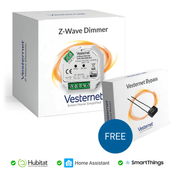
 Z-Wave dimmer moduleFits behind an existing light switch
 Z-Wave radiator valveRoom-by-room heating through solid walls
 Zigbee motion sensorSmall, battery powered and low cost
 Zigbee smart plugSwitches an appliance and extends the mesh
 Thread door sensorA Matter device on a Thread mesh
 Matter wall switchWorks with several ecosystems at once
Common questions
Is Z-Wave or Zigbee better?
Neither is better overall. Z-Wave copes better with walls and has stricter certification. Zigbee has more devices and is the same worldwide. In a typical home both are reliable when the mesh is built properly.
Will Matter replace Z-Wave and Zigbee?
Not in any timescale that should affect what you buy today. Both are still being developed, new products keep arriving, and some controllers can bridge them into Matter.
Do Z-Wave and Zigbee interfere with each other?
No. They use completely different frequencies.
Can a Z-Wave device control a Zigbee device?
Yes, through the controller. A direct link between two devices only works within one technology.
Do I need the internet for any of them?
No. Z-Wave, Zigbee and Thread all run inside your home. Whether automations keep working offline depends on the controller.
Which is best for a large house?
Z-Wave reaches further per hop. Z-Wave Long Range can reach outbuildings directly, if you have an 800 series Long Range device and a controller that supports Long Range in the UK and Europe. Whichever you use, plan enough mains-powered devices. See Building a reliable network.
What you'll need
- A controller with the radios you plan to use
- Z-Wave devices
- Zigbee devices
- Matter devices and Thread devices