Modern homeowners increasingly seek smart lighting solutions that offer flexibility, energy efficiency, and seamless integration with existing home automation systems, yet choosing between basic switching and advanced dimming control often creates confusion. The decision becomes particularly challenging when comparing devices that share many fundamental capabilities but serve different smart home automation needs.
This comprehensive comparison will help you determine whether the straightforward reliability of the Vesternet Zigbee Switch or the advanced features of the Vesternet Zigbee Dimmer better suits your specific lighting needs and home automation goals. Understanding the nuances between these smart home protocol options ensures you make an informed investment in your home control infrastructure.
As a leading UK smart home specialist with extensive hands-on experience, Vesternet provides expert insights backed by real-world testing and customer feedback to guide your decision-making process. Both devices leverage Zigbee 3.0 technology for reliable wireless communication and offer exceptional compatibility across multiple platforms.

Understanding the Vesternet Zigbee Switch: Simple Smart Control
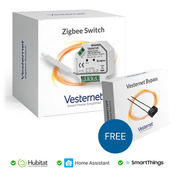
The Vesternet Zigbee Switch delivers fundamental smart lighting control through reliable on/off switching functionality. This device transforms traditional lighting circuits into intelligent systems whilst maintaining the simplicity that many homeowners appreciate in their smart home automation setup.
Installation flexibility stands as one of the switch's primary advantages, supporting both 2-wire (without neutral) and 3-wire (with neutral) wiring scenarios. The included bypass accessory ensures stable operation with low load rating lighting, accommodating various electrical configurations found in UK homes.
Key Technical Capabilities
- Handles up to 4.8A resistive loads (incandescent, halogen) and 1.4A capacitive/inductive loads (LED)
- Operates independently without requiring a hub for basic installations
- Supports configurable power failure states for predictable behaviour during outages
- Features dry contact input for integration with existing wall switches

Exploring the Vesternet Zigbee Dimmer: Advanced Lighting Management
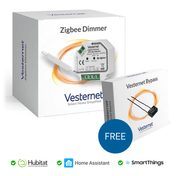
The Vesternet Zigbee Dimmer elevates smart home automation beyond simple switching by incorporating sophisticated lighting control and monitoring capabilities. This advanced device transforms how you interact with lighting whilst providing valuable energy insights through comprehensive monitoring features.
Soft start functionality represents a standout feature, gradually ramping lighting to desired levels rather than instant illumination. This gentle approach proves particularly beneficial during night-time use whilst extending bulb lifespan across various load types including dimmable LED, halogen, and incandescent lighting.
Advanced Control Features
- Supports trailing edge dimming for optimal LED compatibility
- Monitors power, voltage, current, and energy consumption in real-time
- Handles up to 400W incandescent/halogen or 200W LED loads
- Offers adjustable minimum and startup brightness levels for customised operation
Switching vs Dimming: Core Functionality and Feature Distinctions
The fundamental difference between these devices lies in their control mechanisms and monitoring capabilities. The Zigbee Switch provides binary on/off control with robust load handling up to 4.8A for resistive loads, making it ideal for areas requiring straightforward lighting control without dimming requirements.
Conversely, the Zigbee Dimmer offers variable brightness control alongside comprehensive energy monitoring features. Its power, voltage, current, and energy metering capabilities enable detailed consumption analysis, helping homeowners identify energy-saving opportunities across different dimming levels.
Load Handling Comparison
- Switch: Supports broader load range (4.8A resistive, 1.4A LED) for high-power applications
- Dimmer: Focuses on dimming loads (400W incandescent/halogen, 200W LED maximum)
- Both devices support 2-wire and 3-wire installation with bypass accessories
The dimmer's soft start functionality and trailing edge dimming technology specifically address LED compatibility challenges common in modern smart home protocol implementations. These features ensure smooth operation across various dimmable load types whilst the switch prioritises maximum load capacity for non-dimming applications.
Energy monitoring represents a significant differentiator, with the dimmer providing real-time consumption data that enables informed decisions about lighting usage patterns. This capability supports broader home control strategies focused on energy efficiency and cost reduction.
Unique Functionalities
- Dimmer exclusive: Soft start lighting, energy monitoring, variable brightness control
- Switch exclusive: Higher load capacity, simplified operation, lower complexity
- Shared features: Zigbee 3.0 connectivity, bypass accessories, configurable power failure states

Real-World Performance: Response Times and Reliability Testing
Both devices demonstrate excellent responsiveness in typical smart home automation scenarios, with switching commands executing within milliseconds across supported platforms including Hubitat, Home Assistant, and SmartThings. The Zigbee 3.0 implementation ensures reliable mesh networking and consistent performance across various home environments.
The switch excels in high-frequency switching scenarios where instant response takes priority over advanced features. Its robust design handles frequent on/off cycles without performance degradation, making it suitable for areas like utility rooms or security lighting applications.
Performance Under Load
- Switch maintains consistent response times across full 4.8A resistive load range
- Dimmer provides smooth brightness transitions without flickering on compatible loads
- Both devices handle power fluctuations reliably within 0°C to 40°C operating range
- Memory retention ensures last-known states persist through power cycling
Dimming responsiveness varies based on load type and dimming level, with trailing edge technology ensuring compatibility across LED varieties. The soft start feature adds approximately 1-2 seconds to full brightness achievement, which some users find beneficial whilst others may prefer instant illumination for task lighting scenarios.
Vesternet Zigbee Switch: Strengths and Limitations Analysis
The Zigbee Switch's primary strength lies in its straightforward functionality and robust performance across various load types. Its ability to handle higher current loads makes it particularly valuable for applications requiring maximum power delivery without dimming complexity, such as outdoor lighting or high-wattage fixture control.
Cost-effectiveness represents another significant advantage, delivering essential smart home automation capabilities without premium features that may remain unused in basic installations. The device's simplicity translates to reliable long-term operation with minimal configuration requirements.
Core Limitations
- No dimming capability limits ambiance control options
- Absence of energy monitoring prevents consumption analysis
- Binary control reduces flexibility for mood lighting scenarios
These limitations become apparent when homeowners later desire enhanced lighting control or energy management capabilities. However, for applications prioritising reliability and maximum load capacity, these trade-offs prove acceptable for many smart home protocol implementations focused on basic automation needs.
Vesternet Zigbee Dimmer: Benefits and Potential Drawbacks
The Zigbee Dimmer's comprehensive feature set provides exceptional value for energy-conscious homeowners seeking advanced lighting control. Its monitoring capabilities deliver actionable insights into consumption patterns whilst the dimming functionality enables precise ambiance management across various scenarios.
Soft start technology and trailing edge dimming ensure optimal compatibility with modern LED lighting whilst extending bulb lifespan through gentle power delivery. These features address common compatibility issues encountered in smart home automation deployments involving mixed lighting technologies.
Consideration Factors
- Higher complexity requires additional configuration for optimal performance
- Lower maximum load capacity (200W LED vs 1.4A switch rating)
- Energy monitoring features require compatible hub for full utilisation
- Dimming compatibility depends on specific LED driver designs
The device's sophistication may overwhelm users seeking simple on/off control, whilst the reduced load capacity could limit applications requiring high-power lighting solutions. However, for most residential applications, the 200W LED capacity proves more than adequate for contemporary lighting installations.
Matching Smart Lighting Solutions to Your Lifestyle and Needs
Choosing between these devices depends largely on your specific home control requirements and long-term smart home automation goals. Basic automation seekers who primarily need reliable on/off control for utility areas, garages, or outdoor lighting will find the Zigbee Switch delivers excellent value without unnecessary complexity.
Energy-conscious homeowners benefit significantly from the dimmer's monitoring capabilities, which provide detailed consumption data enabling informed decisions about lighting usage patterns. The ability to compare energy consumption at different dimming levels often reveals opportunities for significant cost savings without compromising lighting quality.
Ideal Use Cases by User Type
- Tech-savvy enthusiasts: Dimmer for comprehensive control and data insights
- Budget-conscious homeowners: Switch for essential automation without premium costs
- Ambiance creators: Dimmer for mood lighting and entertainment environments
- High-load applications: Switch for maximum power delivery capabilities
Landlords and property managers often prefer the switch's simplicity and reliability for tenant-occupied properties, whilst homeowners creating dedicated entertainment spaces or reading areas benefit from the dimmer's precise brightness control and soft start functionality.
Consider your specific room requirements: bedrooms and living areas typically benefit from dimming capabilities, whilst utility rooms, garages, and outdoor areas often require only reliable switching. The decision ultimately balances immediate needs against future smart home protocol expansion plans.
Installation Scenarios
- Retrofit installations: Both support 2-wire configurations for older properties
- New construction: 3-wire capability enables full feature utilisation
- Mixed lighting types: Dimmer's trailing edge technology ensures LED compatibility
- Standalone operation: Both function independently without hub requirements

Making the Right Choice for Your Smart Lighting Journey
Both the Vesternet Zigbee Switch and Dimmer offer excellent smart home integration and flexible installation options, but your choice ultimately depends on whether you prioritise simple, reliable switching or advanced lighting control with energy monitoring capabilities. Each device excels in specific scenarios whilst sharing fundamental Zigbee 3.0 reliability and platform compatibility.
Consider the Zigbee Switch for straightforward automation needs where basic on/off control suffices, particularly in utility areas, outdoor lighting, or high-power applications requiring maximum load capacity. Its robust performance and cost-effectiveness make it ideal for foundational smart home automation implementations.
Think about your specific requirements: Do you need dimming functionality? Is energy monitoring important? Are you controlling basic lighting or creating mood lighting scenarios? Your answers will guide you to the perfect solution that balances immediate needs with long-term home control expansion possibilities.
Browse both products in our collection to discover detailed specifications and find the ideal smart lighting control that transforms your home automation experience into a seamlessly integrated, efficient, and responsive smart home protocol implementation.