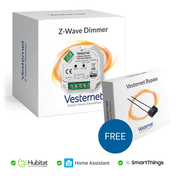
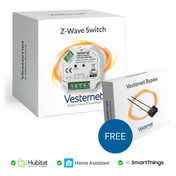
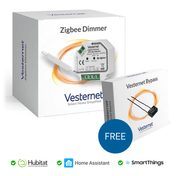
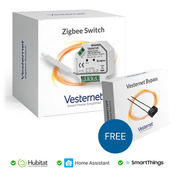
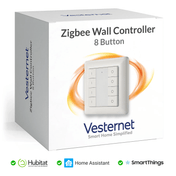
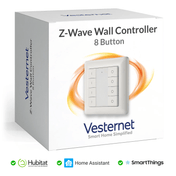
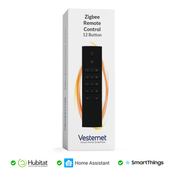
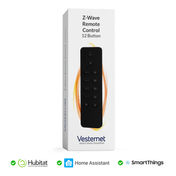
The smart home automation landscape is evolving rapidly, with dual-channel switch modules becoming essential for homeowners seeking precise control over multiple lighting circuits and appliances while monitoring energy consumption. These sophisticated switching solutions offer the flexibility to manage two independent circuits from a single compact module, revolutionising how we interact with our home's electrical systems.
This comprehensive comparison will help you choose between Vesternet's Zigbee and Z-Wave 2 Channel switches, examining their protocol advantages, compatibility differences, and real-world performance to match your smart home setup perfectly. As the UK's leading smart home specialists with over a decade of experience, Vesternet provides expert insights and custom-engineered drivers to ensure you make the right choice for your automation needs.

Zigbee 3.0 Powerhouse: Understanding the Wireless Wonder
The Vesternet Zigbee 2 Channel Switch represents the pinnacle of mesh networking technology, delivering exceptional dual-channel control without requiring a dedicated hub for basic operations. This innovative approach sets it apart from traditional switching solutions, offering remarkable flexibility for modern smart homes.
Key Zigbee Advantages
- TouchLink pairing enables direct device-to-device communication
- Green Power support maximises energy efficiency across your network
- Find and Bind functionality simplifies complex installations
- Comprehensive power, voltage, current, and energy monitoring capabilities
Supporting both 5.1A per channel for resistive loads and 1.7A per channel for LED applications, this switch handles diverse load types including incandescent, halogen, capacitive, and inductive devices with built-in overload protection operating reliably from 0°C to 40°C.

Z-Wave Plus V2 Champion: The Security-First Smart Switch
The Vesternet Z-Wave 2 Channel Switch prioritises security and compatibility, featuring advanced S2 encryption alongside comprehensive scene activation capabilities. This professional-grade solution excels in environments where robust security and extensive hub compatibility are paramount considerations for switching solutions.
Z-Wave Excellence Features
- S2 security encryption provides military-grade network protection
- Central Scene Command Class supports single, double, and triple press actions
- Enhanced range and reliability through Z-Wave Plus V2 technology
- Backwards compatibility ensures seamless integration with older systems
Matching identical electrical specifications with 5.1A resistive and 1.7A LED capacity per channel, this switch delivers the same robust performance across all load types while maintaining configurable power failure states and comprehensive energy monitoring throughout its 0°C to 40°C operating range.
Protocol Battle: Mesh Networks, Security, and Smart Home Ecosystems
Understanding the fundamental differences between Zigbee 3.0 and Z-Wave Plus V2 protocols reveals why each excels in specific scenarios. Zigbee operates on the globally available 2.4GHz frequency, creating dense mesh networks that self-heal and optimise routing automatically, whilst Z-Wave utilises sub-1GHz frequencies (868MHz in Europe) for superior wall penetration and reduced interference.
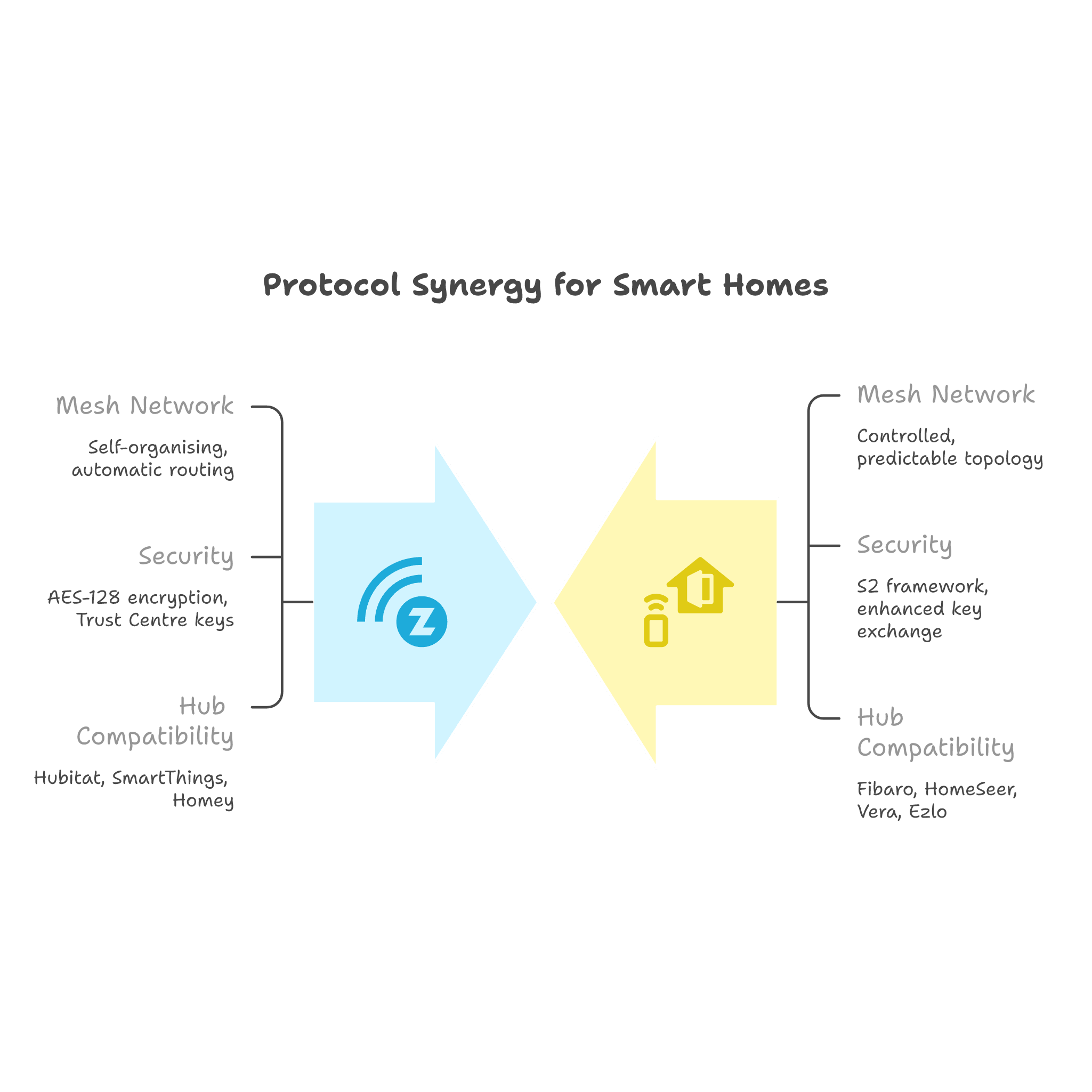
Mesh Network Architecture
Zigbee networks support unlimited devices with sophisticated routing algorithms, allowing direct device communication without hub intervention. Z-Wave networks accommodate up to 232 devices per controller, utilising a more structured approach with centralised routing through the primary controller.
- Zigbee: Self-organising mesh with automatic route discovery
- Z-Wave: Controlled mesh with predictable network topology
- Zigbee: Direct device pairing through TouchLink functionality
- Z-Wave: Hub-centric inclusion with scene activation support
Security Implementation Differences
Security architectures differ significantly between protocols. Zigbee 3.0 implements AES-128 encryption with Trust Centre-based key management, whilst Z-Wave Plus V2 features the advanced S2 security framework with multiple authentication levels and enhanced key exchange protocols.
Hub compatibility varies dramatically between protocols. The Zigbee switch works with Hubitat, Samsung SmartThings, and Athom Homey platforms, whilst the Z-Wave switch boasts extensive compatibility including Fibaro, HomeSeer, Vera, and Ezlo controllers alongside the same major platforms, providing broader ecosystem integration options.
Real-World Responsiveness: Speed, Reliability, and Network Performance
Network performance characteristics reveal distinct operational personalities between protocols. Zigbee networks typically demonstrate faster command execution due to optimised mesh routing and lower protocol overhead, whilst Z-Wave networks prioritise reliability through guaranteed delivery mechanisms and structured communication patterns.
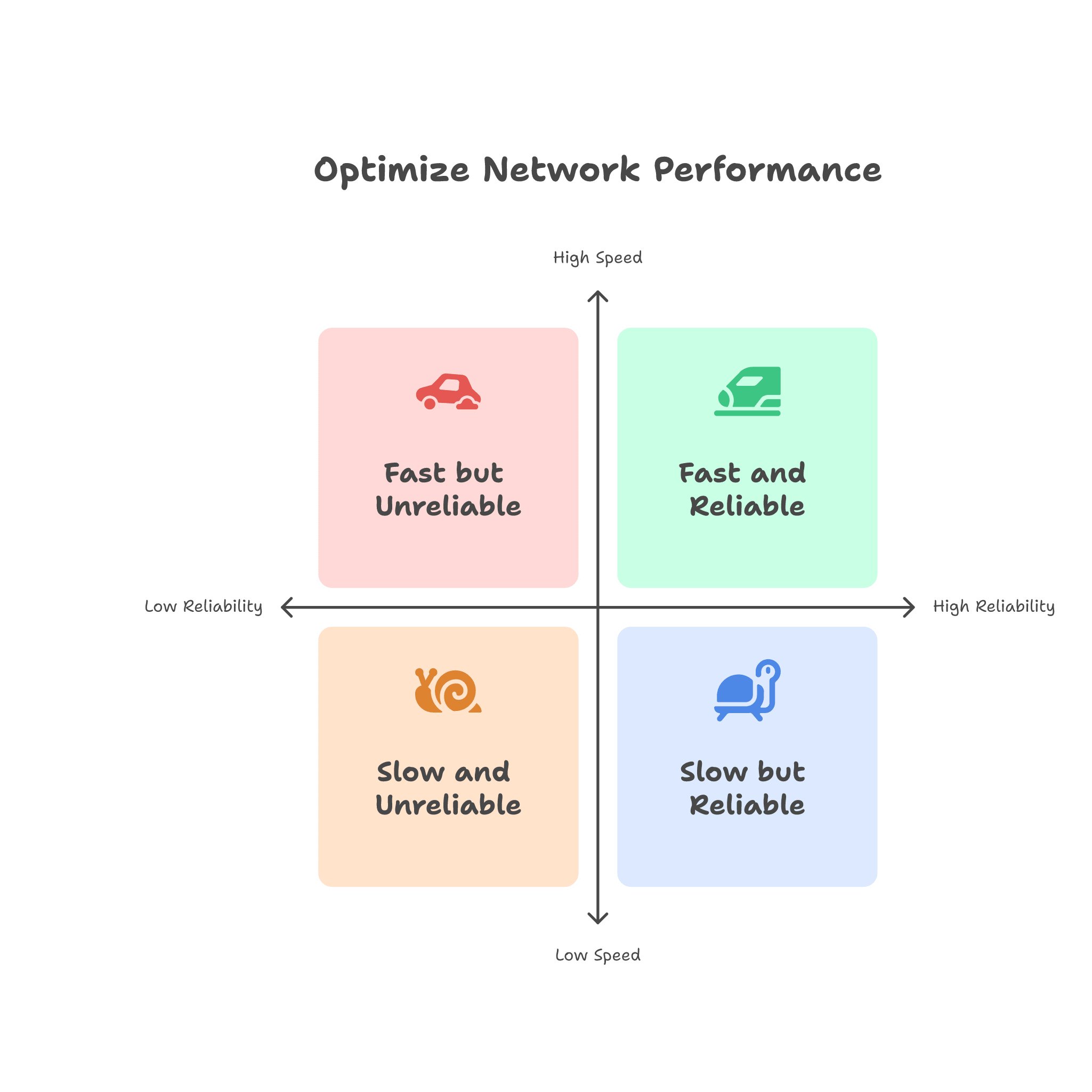
Command Response Analysis
- Zigbee: Near-instantaneous local responses via direct mesh routing
- Z-Wave: Consistent sub-second responses with guaranteed acknowledgement
- Zigbee: Superior handling of high-density device environments
- Z-Wave: Enhanced wall penetration and basement coverage capabilities
Range performance varies based on environmental factors and network density. Zigbee excels in open environments with multiple repeating devices, creating robust mesh networks that adapt dynamically to changing conditions. Z-Wave's lower frequency provides superior obstacle penetration, maintaining stable connections through multiple walls and floors.
Interference Management
Both protocols handle interference differently, with Zigbee employing dynamic channel selection and adaptive frequency hopping to avoid congestion. Z-Wave's dedicated frequency band experiences minimal interference from WiFi and Bluetooth devices, ensuring consistent performance in RF-dense environments typical of modern switching solutions installations.
Network stability depends heavily on proper implementation and device placement. Zigbee networks benefit from strategic repeater placement and channel optimisation, whilst Z-Wave networks require careful inclusion procedures and network healing to maintain optimal performance throughout their operational lifespan.
Zigbee Switch Strengths and Limitations Revealed
The Zigbee 2 Channel Switch excels through its hub-free operational capability, enabling direct pairing with remote controls and wall controllers for immediate functionality. This standalone operation proves invaluable for rental properties and situations requiring rapid deployment of switching solutions without complex infrastructure requirements.
Core Advantages
- Green Power support significantly reduces overall network energy consumption
- TouchLink pairing simplifies device commissioning and maintenance
- Find and Bind functionality automates complex binding relationships
- Mesh efficiency optimises battery life for portable controllers
However, limitations include restricted hub compatibility compared to Z-Wave alternatives and potential security concerns in environments requiring the highest protection levels. The 2.4GHz frequency band may experience congestion in WiFi-dense environments, potentially affecting performance in apartment buildings or office environments where multiple networks compete for spectrum space.
Security Considerations
Whilst Zigbee 3.0 provides adequate security for most residential applications, installations requiring maximum protection may prefer Z-Wave's advanced S2 implementation. The open standard nature of Zigbee, whilst promoting interoperability, may raise concerns for security-conscious users seeking proprietary protection levels.
Z-Wave Switch Benefits and Potential Drawbacks Exposed
The Z-Wave 2 Channel Switch delivers unmatched hub compatibility, supporting an extensive range of controllers from Fibaro and HomeSeer to Vera and Ezlo systems. This broad compatibility ensures investment protection and provides flexibility for future system expansion without protocol limitations constraining switching solutions choices.
Major Strengths
- S2 security encryption provides military-grade network protection
- Central Scene Command Class enables sophisticated automation triggers
- Enhanced range through sub-1GHz frequency operation
- Backwards compatibility preserves existing system investments
Potential drawbacks include mandatory hub requirements for all functionality and increased network complexity requiring proper planning and maintenance. The structured network topology, whilst providing predictability, may limit spontaneous network expansion and requires more careful consideration during installation phases.
Network Management Complexity
Z-Wave networks demand greater technical understanding for optimal performance, requiring network healing procedures and careful device inclusion sequences. This complexity may challenge novice users but provides networking professionals with precise control over network behaviour and performance characteristics throughout the system's operational lifecycle.
Perfect Match: Which Switch Suits Your Smart Home Style
Tech enthusiasts seeking cutting-edge flexibility will appreciate the Zigbee switch's hub-free operation and advanced mesh capabilities. Its Green Power support and TouchLink pairing appeal to users prioritising energy efficiency and rapid deployment, whilst comprehensive compatibility with Hubitat, SmartThings, and Home Assistant satisfies diverse platform preferences.
User Profile Matching
Renters and temporary installations benefit enormously from Zigbee's standalone operation, enabling sophisticated lighting control without permanent infrastructure modifications. The ability to pair directly with wall controllers means functional smart lighting systems without hub dependencies, perfect for switching solutions in rental properties.
- Zigbee: Ideal for hub-free installations and energy-conscious users
- Z-Wave: Perfect for security-focused and professional installations
- Zigbee: Better suited for tech-savvy users comfortable with mesh networks
- Z-Wave: Excellent for users prioritising broad compatibility and scene control
Specific Use Case Recommendations
Families requiring robust security features should choose the Z-Wave switch with its advanced S2 encryption and scene activation capabilities. Property managers overseeing multiple installations will appreciate Z-Wave's extensive hub compatibility and structured network management, ensuring consistent performance across diverse controller platforms.
Energy-conscious homeowners monitoring consumption patterns benefit from both switches' comprehensive metering capabilities, but Zigbee's Green Power support provides additional network-wide efficiency gains. Professional installers requiring maximum flexibility across different client systems will find Z-Wave's broad compatibility advantageous for standardised switching solutions deployment.
Installation Environment Considerations
Dense WiFi environments may favour Z-Wave's dedicated frequency band, whilst homes with extensive smart device ecosystems might benefit from Zigbee's unlimited network capacity and mesh efficiency. Consider your specific requirements: immediate functionality without hubs (Zigbee) or maximum compatibility with advanced scene control (Z-Wave).
Making the Right Choice for Your Smart Home Journey
Both Vesternet switches deliver identical electrical performance with dual-channel control, comprehensive energy monitoring, and robust load handling capabilities, making either choice technically sound for your smart home. The decision ultimately depends on your existing smart home ecosystem, security priorities, and installation preferences - choose Zigbee for hub-free flexibility and mesh efficiency, or Z-Wave for maximum compatibility and advanced security features.
Consider which protocol features matter most to your specific setup: Zigbee's standalone operation and energy efficiency, or Z-Wave's extensive hub support and scene activation capabilities. Ready to upgrade your lighting control? Explore both switches in our smart home collection and discover how either option can transform your home automation experience with Vesternet's expert support and ongoing driver updates.
Ready to upgrade your lighting control? Explore our Zigbee switch and Z-Wave switch options and discover how either can transform your home automation experience.