In short: A plain-English A to Z of smart home and home automation terms, from 2-way lighting to Zigbee 3.0. Each entry is a sentence or two, with a link to the guide or product type where there is more to read.
Who this guide is for
- You're new to smart home vocabulary and want the jargon explained.
- You've met a term on a product page or in a manual and want a quick answer.
- You're an installer who needs a simple definition to give a customer.
The main technologies at a glance
Most of the terms below belong to one of these. Smart home devices talk to each other using a wireless language, called a protocol. A device and a hub must share a protocol to work together.
| Protocol | Radio | What it needs | Known for |
|---|---|---|---|
| Z-Wave | 868 MHz in the UK and Europe | A Z-Wave controller | In-wall modules, heating, good range through walls |
| Zigbee | 2.4 GHz | A Zigbee hub or USB stick | Wide choice of sensors, plugs and lighting |
| Thread | 2.4 GHz | A border router | Low-power mesh used by many Matter devices |
| Matter | Runs over Wi-Fi, Ethernet and Thread | A Matter controller | One device working with several systems |
| Wi-Fi | 2.4 and 5 GHz | Your home router | Cameras and mains devices with no hub |
| Bluetooth | 2.4 GHz | A phone or hub nearby | Set-up and short-range devices |
How the pieces fit together
Three terms come up in almost every guide: the hub, the mains-powered devices that pass messages on, and the battery devices at the edge. Each has more than one name.
0 to 9
- 2-way lighting
- One light controlled from two switches, such as the top and bottom of the stairs. Making it smart needs a module that supports a second switch, or a battery wall controller in place of one switch.
- 2-wire (no neutral)
- A light switch position with only live and switched live wires, and no neutral. Common in UK homes. Choose a dimmer or switch module that is made for 2-wire use.
- 3-wire (with neutral)
- A switch position that also has a neutral wire. Most switch and relay modules need one. See Neutral.
- 700 and 800 series
- Generations of the chip inside Z-Wave devices. Each one improves range and battery life. The 800 series is the current generation.
- 868 MHz
- The radio frequency Z-Wave uses in the UK and Europe. Devices made for other regions use different frequencies and won't work here.
A to C
- Actuator
- Any device that does something when told to, such as a switch, dimmer, valve or motor controller. The opposite of a sensor.
- Association
- A direct link between two Z-Wave devices, so one controls the other without going through the hub. It is fast and keeps working if the hub is offline. See Z-Wave explained.
- Automation
- A rule the hub runs for you: when something happens, do something. For example, when the door opens after dark, turn on the hall light. Some apps call these rules, flows or routines.
- Binding
- The Zigbee version of an association. A remote bound to a light controls it directly, with no hub in between.
- Bluetooth
- A short-range radio found in every phone. In smart homes it is mostly used to set a device up before it joins Wi-Fi, Thread or Matter.
- Border router
- The device that connects a Thread network to your home network. Many smart speakers, hubs and Wi-Fi routers have one built in. A home can have several.
- Bridge
- A device that connects one system to another. A Matter bridge, for example, shares Zigbee or Z-Wave devices with Matter systems. Some brands also call their own hub a bridge.
- Bypass
- A small component fitted across a light fitting. It stops low-wattage LED lamps flickering or glowing when used with a 2-wire dimmer.
- Channel
- A slice of a radio band. Zigbee, Thread and Wi-Fi each use a channel in the 2.4 GHz band, and choosing ones that don't overlap reduces interference. See Zigbee explained.
- Cloud
- Servers on the internet run by a manufacturer. A cloud-dependent device stops responding if your internet, or the maker's service, goes down. See Local control.
- Controller
- The box that runs your smart home network, stores your automations and connects everything to your phone. Also called a hub or gateway. See Choosing a smart home controller.
- Coordinator
- The Zigbee name for the hub or USB stick that creates the network. There is one per Zigbee network.
D to G
- Device
- Any single product on your network: a sensor, plug, module, remote or valve.
- Dimmer
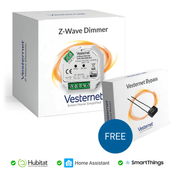
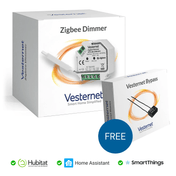
- A device that varies the brightness of a light. Smart dimmers come as in-wall modules or complete wall switches. Check the lamp type and load it supports.
- DIN rail module
- A switch, relay or meter shaped to clip onto the metal rail inside a consumer unit or enclosure. See DIN modules. Fitting one is a job for a competent person.
- Dry contact
- A relay output that is not connected to mains power, also called volt-free or potential-free. It is used to signal boilers, gates and garage doors.
- DSK
- Device Specific Key. The unique number, also printed as a QR code, on a Z-Wave device with S2 security. You enter or scan it when adding the device.
- End device
- A Zigbee or Thread device that does not pass messages on for others. Most are battery powered, such as sensors and remotes.
- Energy monitoring
- Measuring how much electricity something uses. Many plugs and modules report it, and clamp meters measure a whole circuit or house. See energy devices.
- Ethernet
- A wired network connection. A hub on an Ethernet cable is more dependable than one on Wi-Fi, and easier to place away from the router.
- Exclusion
- Removing a Z-Wave device from a network. A device must be excluded from its old network, or factory reset, before it can join a new one.
- Firmware
- The software inside a device or hub. Updates fix faults and add features. See OTA.
- Gang
- The number of switches on one plate. A 2-gang switch has two rockers or buttons and controls two circuits.
- Gateway
- Another name for a controller or hub. The term is often used for a brand's own simple hub.
- Group
- Several devices controlled together as one, such as all the lamps in a room. In Z-Wave, an association group is the slot a device offers for direct links to others.
H to L
- Home automation
- Controlling lighting, heating, security and appliances automatically or remotely. "Smart home" and "connected home" are other terms for the same thing.
- Hub
- The everyday word for a controller. See smart home controllers.
- Inclusion
- Adding a Z-Wave device to a network. Other systems call it pairing or joining.
- IP rating
- A two-digit code showing how well a product resists dust and water, such as IP44 or IP65. Check it before using anything outdoors or in a bathroom.
- IR (infrared)
- The invisible light that TV remotes use. An IR controller lets a hub operate TVs, air conditioners and other remote-controlled equipment.
- Leading edge and trailing edge
- Two ways a dimmer reduces power to a lamp. Trailing edge suits most LED lamps. Leading edge suits older lamps and some transformers. Many smart dimmers detect which to use.
- Live
- The wire that carries mains power to a switch or device, brown in modern UK wiring. Mains wiring must be done by a competent person.
- Load
- Whatever a switch or dimmer is powering, such as a lamp, heater or motor. Every device has a maximum load, in watts or amps.
- Local control
- Devices and automations that run inside your home without the internet. They respond faster and keep working when your broadband is down.
- Lux
- A measure of light level. Sensors that report lux let lights come on only when a room is dark enough to need them.
M to O
- Matter
- A standard that lets one device work with Apple Home, Google Home, Amazon Alexa, SmartThings and other systems. It runs over Wi-Fi, Ethernet and Thread. See Matter devices.
- Mesh network
- A network where devices pass messages on for each other, so coverage grows as you add devices. Z-Wave, Zigbee and Thread are all mesh networks.
- mmWave presence
- A sensor that uses low-power radar to detect a person who is sitting still, which an ordinary motion sensor would miss. See motion and presence sensors.
- Module
- A small device fitted behind a switch or in a ceiling rose to make an ordinary light or appliance smart. See modules.
- Momentary switch
- A switch that springs back when you let go, like a doorbell push. Also called retractive. It is the best partner for a dimmer module.
- Motor controller
- A module that drives a motor up, down or to a set position, for blinds, shutters, awnings and curtains. See motor controllers.
- Multi-admin
- A Matter feature that lets one device be added to more than one system at once, for example your hub and Apple Home.
- Neutral
- The wire that completes the circuit back to the supply, blue in modern UK wiring. A module with a neutral connection stays powered whatever the lamp is doing, so it copes with very small loads that trouble a 2-wire module.
- Node
- The Z-Wave word for a device on the network. Each gets a number, its Node ID, and the network as a whole has a Home ID.
- OTA
- Over the air. A firmware update sent to a device by radio from the hub, with no cable.
P to R
- Pairing
- Adding a device to your hub. Z-Wave calls it inclusion and Matter calls it commissioning.
- PIR
- Passive infrared. The usual kind of motion sensor, which detects the body heat of someone moving.
- Polling
- The hub asking a device for its current state at intervals. Modern devices report changes by themselves, so heavy polling is rarely needed and slows a network down.
- Primary controller
- The Z-Wave controller that owns the network and adds or removes devices. A secondary controller is a second one that has joined it. Most homes have only a primary.
- Protocol
- The language devices use to talk to each other, such as Z-Wave, Zigbee, Thread or Wi-Fi. See Will it work with my system?
- Range extender
- A plug-in device whose only job is to pass messages on and fill a gap in coverage. Also called a repeater. See range extenders.
- Relay
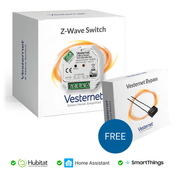
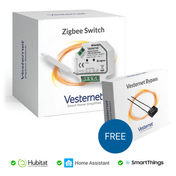
- An electrically operated switch. A relay module turns a circuit fully on or off and can handle loads a dimmer can't. See switch modules.
- Repeater
- Any mains-powered Z-Wave device that passes messages on for others. Zigbee and Thread call the same thing a router.
- RF
- Radio frequency. A general term for wireless signals.
- RGBW
- Red, green, blue and white. An RGBW controller drives colour LED strip and can mix any colour, plus a proper white.
- Router
- In Zigbee and Thread, a mains-powered device that passes messages on. Not the same as your Wi-Fi router, which connects your home to the internet.
S
- S2 security
- The current Z-Wave security standard. Each device has its own key (see DSK), which stops anyone nearby listening in while the device is added.
- Scene
- A saved set of states for several devices, recalled together. "Movie night" might dim the lights to 20% and close the blinds.
- Sensor
- A device that measures or detects something, such as motion, an open door, temperature, humidity, light or a leak, and reports it to the hub. See sensors.
- Setpoint
- The temperature you ask a thermostat or radiator valve to reach.
- Sleepy device
- A battery device that switches its radio off between reports to save power. Changes to its settings only arrive when it next wakes.
- Smart home
- A home where lighting, heating, security and appliances can be controlled from a phone or by voice, and can act automatically. Another term for home automation.
- Smart plug
- An adaptor between a socket and an appliance that switches it on and off. Many also measure energy use and extend the mesh. See plugs.
- SmartStart
- A Z-Wave feature for quick set-up. Scan the device's QR code in your hub's app, power the device on and it joins by itself.
- Switched live
- The wire from a switch to the lamp. It is only live when the switch is on.
T to V
- Thermostat
- A control that measures room temperature and turns the heating on or off to reach the setpoint. See thermostats.
- Thread
- A low-power mesh network for smart home devices, used by many Matter products. It needs a border router. See Thread devices.
- Toggle switch
- An ordinary light switch that stays in the position you leave it, on or off. Compare Momentary switch.
- TRV
- Thermostatic radiator valve. A smart TRV replaces the head on a radiator valve and sets the temperature for that room on a schedule. See TRVs.
- USB stick
- A Z-Wave or Zigbee radio that plugs into a computer, most often to add those networks to Home Assistant. Also called a dongle. See USB sticks.
- Voice assistant
- A voice service such as Alexa, Google's assistant or Siri. Link your hub to one and its devices can be controlled by voice.
W to Z
- Wake-up
- The moment a sleeping battery device switches its radio on to check in with the hub. The wake-up interval sets how often.
- Wall controller
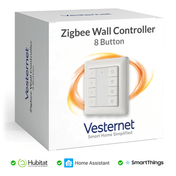
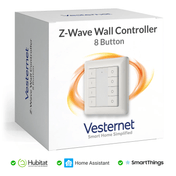
- A battery-powered set of buttons that looks like a light switch. It sticks or screws to the wall with no wiring and triggers scenes or controls lights. See wall controllers.
- Wi-Fi
- The wireless network that connects phones, laptops and TVs to your router. Some smart devices use it directly with no hub. It uses more power than Zigbee or Z-Wave, so it suits mains-powered devices.
- Z-Wave
- A wireless mesh protocol made only for smart homes. It uses a low frequency, well away from Wi-Fi, and certified devices and controllers for the same region are built to work together, though a hub may not support every feature of every device. See Z-Wave explained.
- Z-Wave Long Range
- A mode on some newer Z-Wave devices that talks straight to the hub over a much greater distance, with no mesh. The hub must support it too. Support in the UK and Europe varies by hub, so check with the hub's maker before you rely on it. For Hubitat, check with Hubitat.
- Z-Wave Plus
- A Z-Wave certification with better range and battery life than the original. Z-Wave Plus V2 is the current version and makes S2 security and SmartStart standard.
- ZHA and Zigbee2MQTT
- The two common ways to run a Zigbee network in Home Assistant. ZHA is built in. Zigbee2MQTT is a separate app (formerly called an add-on) with very wide device support.
- Zigbee
- A low-power wireless mesh protocol on the 2.4 GHz band, used by a very wide range of sensors, plugs and lights. See Zigbee explained.
- Zigbee 3.0
- The version of Zigbee that merged the older lighting and home automation profiles, so certified devices from different brands share one network.
Terms you can see
Some terms are easier to recognise than to define.
 Hub or controllerRuns the network and your automations
 USB stickA coordinator for Home Assistant
 ModuleFits behind an existing light switch
 Range extenderA repeater that fills a gap in coverage
 TRVSets the temperature room by room
 End deviceA battery door and window sensor
Browse by device type
 ControllersHubs, gateways and USB sticks
 SensorsMotion, door, temperature and leak
 ModulesSwitches, dimmers and relays
 PlugsSmart plugs and range extenders
 RemotesWall controllers and handhelds
 HeatingTRVs and thermostats
What you'll need
A glossary needs no kit, but these are the places most readers go next. All of our guides are listed on the guides page.