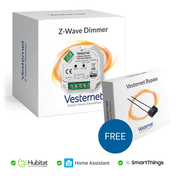
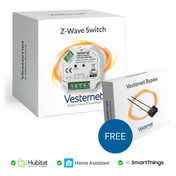
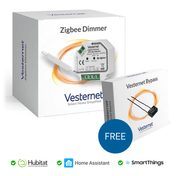
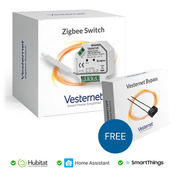
Smart home relay switches are becoming essential for homeowners wanting to automate everything from lighting and heating to garage doors and irrigation systems, but choosing between Zigbee and Z-Wave technologies can be overwhelming. With wireless light switch options proliferating across both protocols, understanding which technology suits your home assistant setup and existing ecosystem is crucial for long-term satisfaction.
This comprehensive comparison will help you decide between the NodOn Zigbee switch and Shelly Qubino Z-Wave 1, examining their automation capabilities, installation flexibility, and smart home integration to find the perfect fit for your setup. With years of experience helping UK homeowners build reliable smart home networks, Vesternet's expertise in both Zigbee and Z-Wave technologies ensures you get unbiased, practical advice for your investment.

Understanding the NodOn Zigbee Multi-Purpose Relay Switch
The NodOn Zigbee 1-Channel 16A Switch represents a versatile solution for controlling gates, heating systems, and various household appliances through your smartphone or voice assistant. This Zigbee 3.0 certified device functions as a true Swiss army knife for home automation, capable of managing everything from boilers and water heaters to garage doors and power sockets with connected screens.
Key Technical Capabilities
- 16A total load rating with potential-free relay output
- Supports LED, halogen, incandescent, resistive, capacitive, and inductive load types
- Ultra-compact profile fitting in flush-mounting pots over 30mm
- 3-wire installation with neutral wire requirement
- Operating temperature range of -20°C to 60°C
The device's Zigbee 3.0 certification ensures full interoperability with compatible ecosystems and voice assistants like Amazon Echo and home assistant platforms. Its 3680W switching capacity and Over-The-Air update capability keep the switch current with the latest firmware improvements through your compatible gateway.

Shelly Qubino Z-Wave 1: Advanced Control with Energy Monitoring
The Shelly Qubino Z-Wave 1 transforms any manual switch into a smart one whilst providing detailed power consumption data and extensive automation options. Built on the latest Z-Wave Plus V2 chip generation (S800), this relay switch offers comprehensive monitoring capabilities alongside standard switching functions, making it ideal for users seeking detailed insights into their electrical consumption patterns.
Advanced Monitoring Features
- Power, voltage, current, and energy monitoring capabilities
- 16A AC and 10A DC load ratings with dual voltage support
- Configurable power failure state and overheating protection
- Automatic on/off timers with NO/NC output configuration
- Z-Wave associations and notification support
This wireless light switch supports both 230V AC mains and 24V DC operation, making it particularly suitable for garage door control and other DC applications. The device's ability to work with over 4000 Z-Wave certified devices ensures broad compatibility across different manufacturers and home assistant setups, creating extensive automation possibilities.
Zigbee 3.0 vs Z-Wave Plus V2: Protocol Performance and Ecosystem Impact
The fundamental differences between Zigbee 3.0 and Z-Wave Plus V2 significantly impact your smart home's reliability and expansion potential. Zigbee 3.0 operates on the crowded 2.4GHz frequency band alongside WiFi and Bluetooth, whilst Z-Wave Plus V2 utilises the less congested sub-1GHz frequencies, potentially offering better signal penetration through walls and reduced interference in busy wireless environments.

Network Architecture Differences
- Zigbee supports larger networks with up to 65,000 devices per network
- Z-Wave networks typically accommodate up to 232 devices but offer more reliable routing
- Zigbee mesh networks self-heal more dynamically but can suffer from frequency congestion
- Z-Wave provides more predictable performance with standardised device profiles
Hub requirements vary significantly between protocols. Zigbee devices work with popular platforms like Samsung SmartThings, Hubitat, and Athom Homey systems, whilst Z-Wave requires dedicated Z-Wave gateways. The NodOn switch's Zigbee 3.0 certification ensures compatibility with major home assistant platforms, whilst the Shelly's Z-Wave Plus V2 implementation guarantees interoperability with over 4000 certified devices.
Both protocols create robust mesh networks where each powered device acts as a signal repeater, extending range and improving reliability. However, Z-Wave's standardised approach often provides more consistent behaviour across different manufacturers, whilst Zigbee's open standard can sometimes lead to compatibility quirks between brands despite certification requirements.
Real-World Installation and Operational Performance
Both switches perform admirably in actual home environments, though their operational characteristics differ in meaningful ways. The NodOn's ultra-compact profile allows installation in flush-mounting pots over 30mm, making it suitable for tight spaces where larger modules won't fit. Its operating temperature range of -20°C to 60°C handles extreme conditions better than the Shelly's -20°C to 40°C specification.

Installation Considerations
- NodOn requires 3-wire installation with neutral, limiting retrofit applications
- Shelly supports both AC mains and DC voltage installations
- Both devices handle momentary and toggle switch types
- Quick installation possible with both switches in appropriate environments
Response times vary based on network conditions and protocol efficiency. Zigbee networks typically provide near-instantaneous response for local commands, whilst Z-Wave networks may introduce slight delays but offer more predictable performance. The Shelly's energy monitoring adds valuable functionality but requires processing time for consumption calculations.
Range capabilities depend on your home's construction and wireless environment. The NodOn benefits from Zigbee's self-healing mesh capabilities, whilst the Shelly's sub-GHz frequency often penetrates walls more effectively. Both switches support network expansion through mesh repeating, though Z-Wave's standardised routing protocols sometimes provide more reliable long-distance communication in challenging environments.
NodOn Zigbee Switch: Compact Design Benefits and Limitations
The NodOn's ultra-compact profile represents its primary advantage for space-constrained installations. At under 30mm depth requirement, this wireless light switch fits where traditional relay modules cannot, making it ideal for modern electrical boxes and retrofit scenarios in older properties with limited space behind switches.
Zigbee Ecosystem Integration Strengths
- Seamless integration with Amazon Echo and major voice assistants
- Compatibility with Hubitat, SmartThings, and Athom Homey platforms
- Over-The-Air updates maintaining current functionality
- Mature Zigbee 3.0 ecosystem with extensive device variety
However, the NodOn's simplicity comes with limitations for power users seeking detailed analytics. Unlike energy monitoring solutions, this switch provides basic on/off functionality without consumption tracking or advanced scheduling features. The 230V AC mains only specification also restricts its use in DC applications like some garage door systems or low-voltage lighting installations. Additionally, the 3-wire neutral requirement may complicate installation in older properties lacking neutral connections at switch locations.
Shelly Qubino Z-Wave 1: Advanced Features vs Complexity Trade-offs
The Shelly Qubino Z-Wave 1 offers comprehensive monitoring and control features that appeal to data-driven homeowners and home assistant enthusiasts. Its power, voltage, current, and energy monitoring capabilities provide detailed insights into electrical consumption patterns, enabling optimisation of energy usage and identification of inefficient appliances.
Advanced Feature Set
- Configurable power failure state ensuring predictable behaviour after outages
- Overheating protection safeguarding connected loads and the device itself
- Automatic on/off timers for scheduled operation
- AC mains state notifications alerting to power disruptions
- Z-Wave associations enabling direct device communication
These advanced features come with increased complexity that may overwhelm casual users. The extensive configuration options require understanding of Z-Wave networking concepts and comfort with detailed setup procedures. While the dual voltage support (230V AC and 24V DC) expands application possibilities, it also introduces additional safety considerations during installation. The energy monitoring features, whilst valuable, generate continuous data streams that require compatible home assistant platforms capable of processing and displaying consumption analytics effectively.
Matching Smart Relay Switches to Your Home Automation Goals
Your choice between these wireless light switch options should align with your technical comfort level, existing ecosystem, and automation ambitions. Tech enthusiasts with established home assistant setups will appreciate the Shelly's comprehensive monitoring and advanced Z-Wave features, particularly if energy optimisation and detailed analytics matter for your smart home strategy.
User Profile Matching
- Beginners benefit from NodOn's simplified Zigbee 3.0 setup and voice assistant compatibility
- Power users prefer Shelly's energy monitoring and extensive automation capabilities
- Retrofit scenarios often favour the compact NodOn for space-constrained installations
- New construction projects can accommodate either switch with proper planning
Existing smart home setups significantly influence the optimal choice. Homes with established Zigbee networks using Hubitat, SmartThings, or Athom Homey systems naturally suit the NodOn switch. Conversely, Z-Wave ecosystems benefit from the Shelly's native protocol support and extensive device interoperability.
Consider your expansion plans when making this decision. Zigbee's larger network capacity suits extensive automation projects, whilst Z-Wave's standardised approach provides more predictable scaling. Both switches support their respective protocol's mesh networking capabilities, but your long-term device preferences should influence your foundation choice.
Installation constraints also matter significantly. The NodOn's ultra-compact profile suits tight spaces but requires neutral wire connections. The Shelly's dual voltage capability opens DC applications but demands careful electrical planning. Evaluate your specific installation requirements against each switch's technical specifications before committing to either platform.
Making the Smart Choice for Your Home's Automation Future
Both the NodOn Zigbee switch and Shelly Qubino Z-Wave 1 offer reliable 16A relay control, but your choice should align with your existing smart home ecosystem and automation ambitions. The NodOn excels in Zigbee networks where simplicity and compact installation matter most, whilst the Shelly provides comprehensive monitoring and advanced features for power users seeking detailed energy insights and extensive automation capabilities.
The 'better' wireless light switch ultimately depends on whether you prioritise the mature Zigbee 3.0 ecosystem with seamless voice assistant integration, or prefer Z-Wave's robust mesh network with detailed energy monitoring. Consider your current hub compatibility, desired features, and long-term smart home plans when making your decision. Both switches support similar load types and offer professional-grade reliability for residential applications.
Ready to upgrade your home automation? Explore both the NodOn Zigbee 1-Channel Switch and Shelly Qubino Z-Wave 1 at Vesternet to discover detailed specifications, compatibility guides, and expert installation support for your home assistant journey.