Rising energy costs and growing environmental awareness have made smart heating control essential for modern homes, with thermostatic radiator valves (TRVs) offering room-by-room temperature management that can significantly reduce heating bills. These intelligent heating systems enable precise control over individual radiator outputs, eliminating waste and maximising comfort.
This comprehensive comparison examines the Zigbee Popp Smart Thermostat and Z-Wave Fibaro Heat Controller to help you choose the right smart TRV solution for your specific heating needs and smart home setup. As a leading UK smart home specialist, Vesternet has extensive experience with both products, providing real-world insights to guide your heating upgrade decision.

Understanding the Popp Smart Thermostat: Zigbee-Powered Temperature Management
The Popp Smart Thermostat transforms traditional radiators into intelligent heating systems using Zigbee wireless technology. This thermostatic radiator valve features built-in temperature sensors that precisely monitor room conditions, whilst adaptive learning algorithms detect room size and adjust valve control accordingly.
Key Operational Features
- Open window detection automatically reduces heating during ventilation
- Adaptive learning adjusts to room characteristics for optimal performance
- Noise level under 30dBA ensures whisper-quiet operation
- Battery life extends up to 2 years with normal usage
The device integrates seamlessly with popular Zigbee hubs including Aeotec Smart Home Hub, SmartThings, and HomeAssistant. Installing TRV units becomes straightforward with included adapters covering 98% of radiator types, requiring no professional tools or complex setup procedures.

Decoding the Fibaro Heat Controller: Z-Wave Intelligence with Visual Feedback
The Fibaro Heat Controller leverages Z-Wave Plus technology to deliver premium smart heating control with distinctive visual feedback. Its innovative LED ring illuminates when approached, displaying colour-coded temperature information that provides instant situational awareness.
Advanced Technical Capabilities
- Temperature accuracy within 0.5 degrees Celsius
- Automatic calibration ensures optimal installation
- Regular descaling mode prevents valve blockages
- Manual temperature range 16-24°C, app control 10-30°C
This radiator thermostat includes sophisticated algorithms for energy optimisation and supports external temperature sensors for enhanced accuracy. However, it requires horizontal mounting unless paired with the optional temperature sensor, making placement considerations crucial during installation planning.
Wireless Protocols and Smart Home Integration: Zigbee vs Z-Wave Plus
The fundamental difference between these intelligent heating systems lies in their wireless protocols. Zigbee operates on 2.4GHz frequency with mesh networking capabilities, whilst Z-Wave Plus uses sub-1GHz frequencies for enhanced penetration through walls and reduced interference with WiFi networks.
Hub Compatibility Comparison
- Popp supports Athom Homey, Hubitat, Samsung SmartThings
- Fibaro works with all major Z-Wave hubs plus additional controllers
- Both integrate with HomeAssistant for DIY enthusiasts
Installation requirements differ significantly between the products. The Popp offers straightforward mounting with included adapters, whilst the Fibaro requires careful positioning consideration due to horizontal mounting recommendations. Both feature child protection modes and comprehensive scheduling capabilities.
Control Interface Distinctions
- Popp features LCD screen with direct temperature adjustment
- Fibaro uses LED ring feedback with manual knob control
- Both support smartphone app control and voice commands
- Fibaro provides visual temperature indication through colour coding
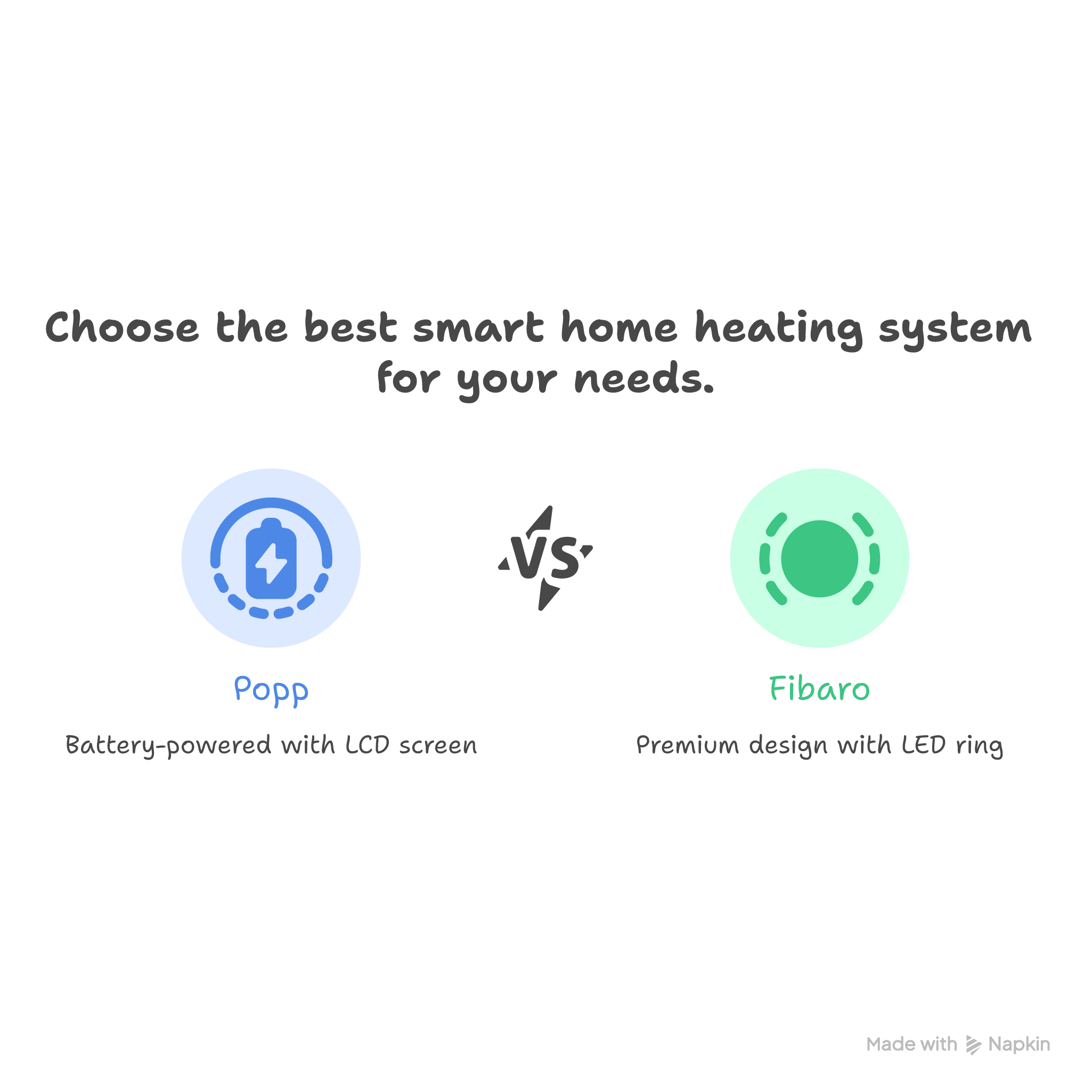
The Popp's battery-powered operation with up to 2-year life cycle contrasts with the Fibaro's focus on premium design and advanced automation features. Both thermostatic radiator valves include boost modes, frost protection, and open window detection as standard features.
Real-World Heating Performance: Response Times and Temperature Accuracy
Both products deliver precise temperature control through integrated sensors and sophisticated algorithms. The Popp's adaptive learning function continuously optimises performance based on room characteristics, whilst the Fibaro's advanced algorithms focus on energy savings through intelligent scheduling and automatic adjustments.
Temperature Sensing Capabilities
- Popp uses built-in sensors for exact room temperature monitoring
- Fibaro achieves 0.5°C accuracy with optional external sensor support
- Both detect sudden temperature drops for open window scenarios
Response times vary based on installation conditions and room characteristics. The Popp's hysteresis control prevents excessive valve cycling, maintaining stable temperatures without frequent adjustments. Meanwhile, the Fibaro's PID control algorithms ensure rapid response to temperature changes whilst minimising overshoot.
Energy Efficiency Metrics
- Open window detection prevents energy waste during ventilation
- Scheduling capabilities reduce heating during unoccupied periods
- Both products support holiday modes for extended absences
- Automatic temperature reduction during sleeping hours
Real-world reliability differs between the models, with the Popp emphasising quiet operation under 30dBA and extended battery life. The Fibaro focuses on premium functionality with automatic calibration and descaling features that maintain long-term performance without manual intervention.
Popp Smart Thermostat Strengths and Limitations
The Popp Smart Thermostat excels in delivering reliable, no-fuss heating control with exceptional battery efficiency. Its whisper-quiet operation under 30dBA ensures undisturbed sleep, whilst the 2-year battery life minimises maintenance requirements for busy households.
Primary Advantages
- Extended battery life reduces replacement frequency
- Ultra-quiet operation ideal for bedrooms
- Comprehensive Zigbee hub compatibility
- Tool-free installation with universal adapters
However, the Popp's straightforward approach may lack visual feedback that some users prefer. The LCD display provides functional information but doesn't offer the intuitive colour-coded system found in premium alternatives. Additionally, whilst Zigbee compatibility is excellent, it's limited compared to the broader Z-Wave ecosystem.
Potential Drawbacks
- Basic visual interface compared to LED ring systems
- Limited to Zigbee protocol ecosystem
- Fewer advanced automation features
Fibaro Heat Controller Benefits and Drawbacks
The Fibaro Heat Controller stands out with its premium design philosophy and advanced automation capabilities. The distinctive LED ring provides intuitive temperature feedback through colour coding, whilst sophisticated algorithms optimise energy consumption without compromising comfort levels.
Premium Features
- Visual temperature feedback through colour-coded LED ring
- Automatic calibration and descaling functionality
- Enhanced Z-Wave Plus security with S2 protection
- Professional-grade temperature accuracy within 0.5°C
The Fibaro's complexity becomes apparent during installation, particularly the horizontal mounting requirement unless paired with external sensors. This limitation restricts placement options and may require additional purchases for optimal performance in certain radiator configurations.
Notable Limitations
- Horizontal mounting restriction without external sensor
- Higher complexity may overwhelm basic users
- Premium features come with increased learning curve
Choosing Your Smart TRV: Which Product Suits Different Home Setups
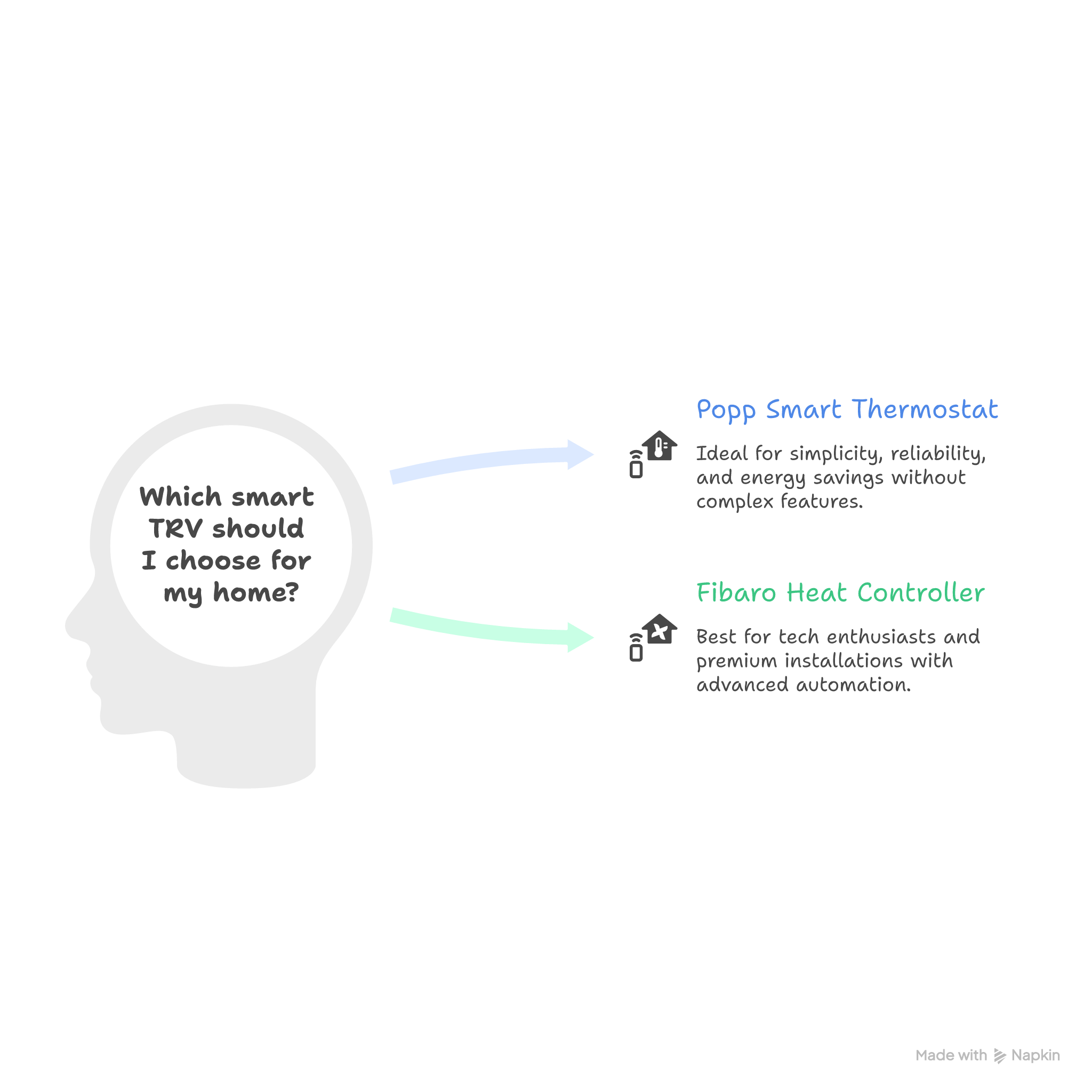
Selecting between these intelligent heating systems depends on your specific requirements, technical expertise, and existing smart home infrastructure. The Popp Smart Thermostat suits users prioritising simplicity, reliability, and extended battery life, making it ideal for straightforward heating control without complex features.
Ideal Scenarios for Popp Smart Thermostat
- Bedrooms requiring ultra-quiet operation
- Rental properties with installation restrictions
- Basic smart home setups focusing on energy savings
- Users preferring minimal maintenance requirements
The Fibaro Heat Controller targets tech enthusiasts and premium installations where visual feedback and advanced automation justify the additional complexity. Its sophisticated features shine in comprehensive smart home systems where integration with multiple sensors and controllers creates sophisticated heating scenarios.
Perfect Applications for Fibaro Heat Controller
- Modern homes with horizontal radiator valve configurations
- Tech-savvy users wanting premium visual feedback
- Comprehensive Z-Wave smart home systems
- Commercial installations requiring professional-grade accuracy
Consider your existing smart home platform when making decisions. Zigbee users will find seamless integration with the Popp, whilst Z-Wave enthusiasts benefit from the Fibaro's extensive compatibility and advanced security features. Both products offer excellent energy savings, but the implementation approach differs significantly.
Decision Factors to Consider
- Existing smart home protocol (Zigbee vs Z-Wave)
- Technical expertise level and installation preferences
- Radiator valve orientation and mounting requirements
- Budget considerations for basic vs premium features
Making the Right Choice for Your Smart Heating Future
Both the Zigbee Popp Smart Thermostat and Z-Wave Fibaro Heat Controller offer excellent smart heating solutions, but the better choice depends entirely on your specific requirements and existing smart home setup. Each product excels in different scenarios, making careful consideration of your priorities essential.
The Popp excels with its quiet operation, extended battery life, and straightforward Zigbee integration, making it ideal for users seeking reliable, no-fuss heating control. Meanwhile, the Fibaro stands out with its premium design, visual feedback system, and advanced Z-Wave features, perfect for those wanting cutting-edge heating technology.
Consider which features matter most to your daily routine: Do you prioritise simplicity and long battery life, or do you value visual feedback and advanced automation? Your answer will guide you to the right smart TRV solution. Explore both products in detail on Vesternet to discover which smart thermostat will transform your heating experience and start saving on energy costs today.