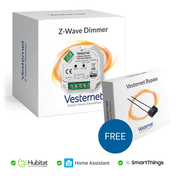
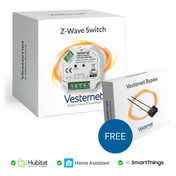
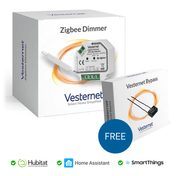
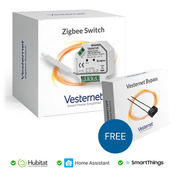
Connecting traditional wired devices to smart home networks has become essential as homeowners seek comprehensive automation, yet choosing between relay switches and IO modules can be overwhelming. The technical specifications alone don't tell the complete story when deciding between Z-Wave and Zigbee solutions.
This comparison will help you determine whether a Z-Wave relay or Zigbee IO module better suits your specific wired device integration needs, considering installation requirements, compatibility, and automation capabilities. As a leading UK smart home retailer, Vesternet has extensive experience with both Z-Wave and Zigbee integration solutions, providing expert guidance for successful smart home installations.

Behind-the-Switch Intelligence: Understanding the Zooz ZEN51 Relay
The Z-Wave Zooz dry contact relay functions as an intelligent intermediary between your existing wall switches and connected devices. This compact device transforms traditional switching into smart switch automation by maintaining constant power to connected loads while enabling wireless control through your Z-Wave network.
Core Capabilities and Applications
The ZEN51 relay excels in several key areas that make it particularly valuable for lighting and appliance control. Its versatility extends beyond simple on/off switching to include advanced scene management and smart bulb compatibility.
- Controls LED lights up to 150W or incandescent bulbs up to 960W
- Manages resistive loads up to 10A for various appliances
- Supports dry contact devices including garage doors and water pumps
- Enables Smart Bulb Mode for maintaining power whilst triggering Z-Wave actions

Hidden Device Bridge: How the Frient IO Module Works
The Zigbee Frient IO module serves as a digital translator, converting analog wired device signals into wireless smart home communications. Unlike traditional relays, this device acts as a bridge between your existing wired appliances and your Zigbee network, enabling remote control without replacing the original device controllers.
Integration and Connectivity Features
The IO module's strength lies in its ability to work with diverse wired systems whilst maintaining their original functionality. This approach allows homeowners to add smart capabilities without major rewiring or device replacement.
- Connects directly to wired devices like blinds, garage doors, and heat pumps
- Maintains original device operation whilst adding smart control
- Compact form factor fits inside technical cabinets or behind outlets
- Enables smartphone control and automation triggers
Protocol Wars and Installation Requirements: Z-Wave vs Zigbee Integration
The fundamental differences between Z-Wave and Zigbee protocols significantly impact installation complexity and system integration. Understanding these distinctions helps determine which approach aligns better with your existing smart home infrastructure and technical capabilities.

Network Architecture and Hub Compatibility
Z-Wave networks operate on a mesh topology with lower device density but greater range per node, whilst Zigbee systems support higher device counts with shorter individual ranges. This affects how each protocol handles network expansion and reliability.
- Z-Wave: Maximum 232 devices per network, excellent range and reliability
- Zigbee: Supports thousands of devices, requires more strategic placement
- Hub requirements vary significantly between protocols
- Home Assistant automation works well with both protocols
Installation and Wiring Considerations
The Zooz ZEN51 relay requires careful attention to neutral wire availability and proper line/load connections. Installation can occur either behind wall switches or at light fixtures, depending on available wiring. The device supports both single-pole and three-way switching configurations.
The Frient IO module offers more flexible installation options due to its bridge-style operation. Rather than interrupting power circuits, it connects to existing device control wires, making installation less dependent on specific electrical configurations. However, proper hub compatibility must be verified before installation.
- ZEN51: Requires neutral wire and careful line/load wiring
- IO Module: Connects to existing device control circuits
- Both devices support professional and DIY installation approaches
Real-World Response Times and Network Reliability
Performance metrics reveal significant differences between Z-Wave and Zigbee implementations in daily operation. Command response times, network stability, and range capabilities vary considerably based on network congestion, hub processing power, and environmental factors.
Response Speed and Network Performance
Z-Wave networks typically deliver more consistent response times due to their lower frequency and reduced interference from WiFi networks. The ZEN51 relay benefits from this stability, particularly in homes with multiple wireless devices competing for bandwidth.
- Z-Wave commands typically execute within 100-300 milliseconds
- Zigbee response varies from 50-500ms depending on network congestion
- Range performance favours Z-Wave in typical residential environments
- Both protocols support reliable mesh networking for extended coverage
Long-term Reliability Factors
Network stability becomes crucial for devices controlling essential home systems. The Z-Wave protocol's frequency separation from common household wireless devices provides inherent stability advantages. However, Zigbee networks can achieve excellent reliability with proper planning and quality hub implementation. Both systems support automatic healing and route optimisation to maintain performance over time.
Zooz ZEN51 Advantages and Limitations
The Z-Wave relay excels in scenarios requiring advanced scene control and seamless smart bulb integration. Its Smart Bulb Mode maintains constant power whilst enabling wireless switching, perfect for homes mixing traditional and smart lighting solutions.
Key Strengths and Applications
- Excellent scene control with momentary switch configurations
- Smart Bulb Mode prevents accidental power disconnection
- Robust Z-Wave mesh networking with excellent range
- Compatible with wide variety of Z-Wave hubs and controllers
Notable Limitations
Installation complexity increases when neutral wires aren't available at switch locations, potentially requiring fixture-level installation. The device's 10A maximum load capacity may limit applications with high-power appliances, and Z-Wave network expansion costs can accumulate with larger installations.
Frient IO Module Benefits and Challenges
The Zigbee IO module shines in applications requiring connectivity to diverse appliance types without disrupting existing functionality. Its compact design and bridge-style operation make it ideal for retrofitting established systems with smart capabilities.
Standout Features and Use Cases
- Versatile connectivity to blinds, garage doors, and heat pumps
- Non-intrusive installation preserving original device operation
- Compact form factor suitable for concealed mounting
- Cost-effective solution for multiple device integration
Operational Constraints
Hub compatibility limitations restrict the IO module's integration options, with full functionality available only on specific platforms like Homey and SmartThings. The Zigbee protocol's susceptibility to WiFi interference can impact performance in crowded wireless environments, and the device's bridge approach may introduce slight delays compared to direct switching solutions.
Perfect Match: Choosing Based on Your Smart Home Goals
Your choice between the Z-Wave relay and Zigbee IO module should align with your specific automation objectives and existing infrastructure. DIY enthusiasts often prefer the Zooz ZEN51's comprehensive scene control and smart bulb compatibility, whilst those seeking versatile appliance integration favour the Frient module's bridge approach.

Z-Wave Relay: Ideal Scenarios
The ZEN51 relay excels in homes prioritising advanced lighting control and scene automation. Its robust Z-Wave networking and Smart Bulb Mode make it perfect for mixed lighting installations combining traditional fixtures with smart bulbs.
- Homes with existing Z-Wave infrastructure requiring expansion
- Applications demanding reliable scene control and advanced automation
- Installations mixing smart bulbs with traditional switching
- Users comfortable with electrical wiring and neutral wire requirements
Zigbee IO Module: Best Applications
The Frient IO module suits homes needing to integrate diverse wired appliances without major modifications. Its bridge design preserves existing functionality whilst adding smart capabilities, making it excellent for retrofit applications.
- Existing Zigbee networks requiring appliance integration
- Retrofit installations preserving original device operation
- Applications requiring compact, concealed smart control solutions
- Users seeking cost-effective multi-device connectivity
Technical Skill and Infrastructure Considerations
Professional installers often prefer the ZEN51's comprehensive control capabilities for complex lighting scenes, whilst the IO module appeals to those seeking simpler integration approaches. Consider your comfort level with electrical work, existing smart home protocol, and long-term expansion plans when making your selection.
Making the Smart Choice for Your Connected Home
Both the Z-Wave Zooz dry contact relay and Zigbee Frient IO module excel at bringing wired devices into your smart home ecosystem, but they serve distinctly different purposes and installation scenarios. The ZEN51 provides comprehensive switching control with advanced scene capabilities, whilst the IO module offers versatile appliance integration through its bridge design.
The better choice ultimately depends on your specific needs: whether you prioritise advanced scene control and lighting integration with smart switch automation, or require versatile connectivity for diverse appliance types across your home. Consider your existing z wave vs zigbee infrastructure, as compatibility with your current hub significantly impacts functionality and future expansion possibilities.
Consider which features align most closely with your automation goals, existing smart home protocol, and technical comfort level before making your decision. Both devices offer reliable paths to enhanced home assistant automation, but their different approaches suit different installation scenarios and user preferences.
Browse both products in our smart home collection to explore detailed specifications and find the perfect solution for your connected home project. Whether you choose the comprehensive control of the Z-Wave relay or the versatile integration of the Zigbee IO module, both offer excellent foundations for expanding your smart home capabilities.