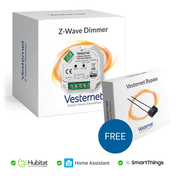
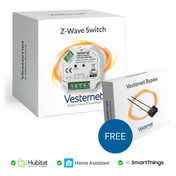
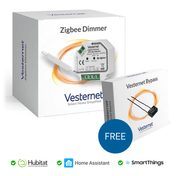
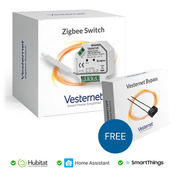
Modern smart homes demand intuitive control solutions, yet the choice between Z-Wave and Zigbee protocols often leaves homeowners confused when selecting an 8-button wall controller. Whether you're seeking a wireless wall dimmer for ambient lighting or a comprehensive scene activation system, the protocol decision fundamentally shapes your entire smart home ecosystem.
This detailed comparison examines how each controller handles scene management, direct device control, and integration with your existing setup. We'll explore which solution suits different home sizes, technical requirements, and automation goals, helping you understand the practical implications of choosing between these protocols.
At Vesternet, we've extensively tested both Z-Wave and Zigbee controllers across diverse smart home environments. Our commitment to providing unbiased technical guidance ensures you receive accurate information about each protocol's capabilities, limitations, and real-world performance characteristics.

Understanding the Z-Wave Wall Controller's Scene Management Capabilities
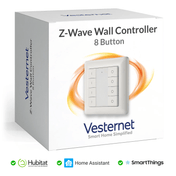
The Vesternet Z-Wave Wall Controller delivers sophisticated scene activation functionality through its 8-button interface, supporting press, hold, and release events for each button. This configuration enables up to 24 unique scene triggers, making it exceptionally versatile for complex lighting scenarios or multi-room automation sequences.
Built on Z-Wave Plus S2 security standards, this controller provides robust network protection whilst maintaining backwards compatibility with older Z-Wave devices. The Central Scene Command Class support ensures seamless integration with leading hubs including Hubitat, SmartThings, and Home Assistant via Z-Wave JS UI.
Key Z-Wave Controller Features
- Direct Association Support for controlling up to 20 Z-Wave devices without hub dependency
- Z-Wave Plus S2 security with enhanced range and reliability
- Status LED feedback for operational confirmation
- Battery-powered wall mounting for flexible placement

Exploring the Zigbee Wall Controller's Standalone Flexibility
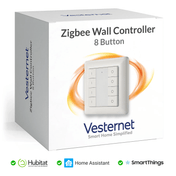
The Vesternet Zigbee Wall Controller excels as a versatile button controller, offering the same 8-button configuration with press, hold, and release events for 24 unique automation triggers. Its standout feature lies in standalone operation capabilities, allowing direct pairing with dimmers or switch modules without requiring a central hub.
This flexibility makes the Zigbee controller particularly appealing for phased smart home deployments or simple installations where a full hub setup isn't immediately necessary. The Zigbee 3.0 protocol ensures future-proof compatibility whilst supporting both Zigbee TouchLink and Find and Bind functionalities for simplified device pairing.
Zigbee Controller Advantages
- No hub required for basic operation with compatible devices
- Direct On/Off and Level Control for immediate device response
- Zigbee TouchLink support for simplified device discovery
- Wall mountable with battery power for installation flexibility
Protocol Differences That Impact Your Smart Home Setup
Z-Wave and Zigbee represent fundamentally different approaches to wireless home automation, each with distinct network architectures and compatibility requirements. Z-Wave operates on sub-GHz frequencies (868MHz in Europe) with a mesh network supporting up to 232 devices per controller, whilst Zigbee utilises the 2.4GHz band shared with WiFi networks.
The Z-Wave protocol's strength lies in its standardised implementation across manufacturers, ensuring consistent device behaviour regardless of brand. Every Z-Wave device functions as a network repeater, creating robust mesh networks with excellent range characteristics. However, this protocol requires a dedicated Z-Wave controller or hub for network coordination and scene management.
Hub Compatibility Considerations
- Z-Wave supports extensive hub compatibility including Fibaro, HomeSeer, and Vera systems
- Zigbee offers broader manufacturer support but may require hub-specific drivers
- Z-Wave ensures cross-brand device interoperability through strict certification
- Zigbee 3.0 improves compatibility but older devices may need specific integration
Security implementation differs significantly between protocols. Z-Wave Plus S2 provides military-grade encryption with authenticated key exchange, whilst Zigbee 3.0 employs AES-128 encryption with improved commissioning processes. Both protocols offer enterprise-level security, though Z-Wave's S2 implementation is more standardised across devices.
Network Architecture Differences
- Z-Wave creates dedicated mesh networks separate from WiFi interference
- Zigbee shares 2.4GHz spectrum potentially causing WiFi conflicts
- Z-Wave supports longer range communications in typical home environments
- Zigbee offers faster data transmission speeds for responsive automation

Real-World Performance: Range, Reliability, and Response Times
In typical residential environments, the Z-Wave controller demonstrates superior signal penetration through walls and floors, leveraging sub-GHz frequencies that encounter less interference from household electronics. Testing reveals reliable operation up to 30 metres indoors with obstacles, whilst the mesh network automatically finds optimal routing paths when direct communication fails.
The Zigbee controller excels in response speed due to higher frequency transmission and efficient protocol overhead. However, 2.4GHz signals face greater attenuation through building materials and potential interference from WiFi routers, microwave ovens, and Bluetooth devices. Strategic placement becomes crucial for maintaining reliable connectivity throughout larger homes.
Battery Performance Characteristics
- Both controllers operate on battery power with similar longevity expectations
- Z-Wave's lower frequency operation typically consumes less power during transmission
- Zigbee's faster communication reduces active transmission time
- Status LED indicators provide visual confirmation without significant power drain
Mesh network stability varies between protocols based on device density and environmental factors. Z-Wave networks excel in reliability due to standardised repeater functionality across all mains-powered devices. Zigbee networks can achieve excellent performance but may require careful planning to ensure adequate repeater coverage, particularly in homes with mixed device generations.
Automation Response Comparison
- Z-Wave Direct Association enables instant device control without hub processing
- Zigbee direct binding provides similar immediate response capabilities
- Both protocols support local processing to maintain functionality during hub outages

Z-Wave Controller: Advantages and Limitations in Modern Homes
The Z-Wave controller's greatest strength lies in its extensive hub compatibility and standardised implementation across the smart home ecosystem. Supporting platforms from Hubitat and SmartThings to Fibaro and HomeSeer, this controller integrates seamlessly regardless of your chosen automation platform. The Direct Association feature enables immediate response times by allowing direct communication with up to 20 Z-Wave devices without hub intervention.
Z-Wave Plus S2 security provides enterprise-grade protection with authenticated device joining and encrypted communications. The dedicated sub-GHz frequency band eliminates WiFi interference concerns, ensuring consistent performance even in electronically dense environments. However, the protocol's reliance on a central controller creates a potential single point of failure for advanced automation scenarios.
Z-Wave Controller Limitations
- Requires dedicated Z-Wave hub or controller for full functionality
- Higher per-device costs compared to some Zigbee alternatives
- Limited to Z-Wave ecosystem for direct device control
- Protocol-specific certification requirements may limit device variety
Zigbee Controller: Strengths and Constraints for Different Users
The Zigbee controller's standout advantage is its standalone operation capability, allowing direct pairing with compatible dimmers and switches without requiring a central hub. This flexibility enables phased smart home deployment or simple installations where users can add hub functionality later. The controller supports both Zigbee TouchLink and Find and Bind protocols for simplified device discovery and pairing.
Zigbee 3.0 protocol implementation ensures broad manufacturer support and improved interoperability compared to earlier Zigbee versions. The faster 2.4GHz communication enables responsive automation whilst maintaining good power efficiency. However, the shared frequency band with WiFi networks can create interference challenges in congested wireless environments.
Zigbee Network Challenges
- Potential 2.4GHz interference from WiFi and household electronics
- Mixed device compatibility across different Zigbee implementations
- Mesh network stability dependent on adequate repeater device placement
- Hub-specific driver requirements for optimal integration in some platforms
Matching Each Controller to Your Smart Home Profile
Choosing between Z-Wave and Zigbee controllers depends primarily on your existing smart home infrastructure and expansion plans. Homeowners with established Z-Wave networks benefit from the protocol's guaranteed interoperability and robust mesh networking capabilities. The Z-Wave controller particularly suits larger homes where reliable long-range communication is essential, or environments with heavy WiFi usage that could interfere with Zigbee devices.
For users building new smart home systems or those requiring immediate functionality without hub investment, the Zigbee controller offers compelling standalone capabilities. Its direct device pairing enables simple lighting control scenarios whilst preserving options for future hub integration and expanded automation. Technical enthusiasts often appreciate Zigbee's faster response times and broader manufacturer ecosystem.
Ideal Z-Wave Controller Users
- Existing Z-Wave smart home installations requiring additional scene control
- Larger homes needing reliable long-range wireless communication
- Users prioritising standardised device interoperability across brands
- Environments with significant WiFi or 2.4GHz interference concerns
Budget considerations also influence protocol selection, though both controllers offer excellent value for their feature sets. Z-Wave typically involves higher per-device costs but provides greater long-term ecosystem stability. Zigbee devices often cost less individually, making them attractive for extensive deployments, though hub requirements and compatibility verification may add complexity.
Zigbee Controller Best Fits
- New smart home installations requiring flexible deployment options
- Users wanting immediate functionality without hub dependency
- Smaller homes or apartments with good WiFi channel management
- DIY enthusiasts comfortable with device compatibility research
Technical expertise levels significantly impact protocol satisfaction. Z-Wave's standardised implementation reduces configuration complexity but limits customisation options. Zigbee offers greater flexibility for advanced users willing to invest time in network optimisation and device compatibility verification. Consider your comfort level with troubleshooting wireless networks and managing device interactions when making this decision.
Making Your Final Decision: Protocol Choice That Fits Your Needs
Both the Z-Wave and Zigbee wall controllers excel in their respective strengths, making the optimal choice dependent on your specific smart home ecosystem and requirements. The Z-Wave controller delivers unmatched reliability and standardised compatibility, particularly valuable in established networks or larger homes requiring robust wireless coverage. Its Direct Association capabilities and S2 security implementation make it ideal for users prioritising network stability and cross-brand device interoperability.
The Zigbee controller offers exceptional deployment flexibility with its standalone operation capabilities, appealing to users seeking immediate functionality or phased smart home development. Its faster response times and broader manufacturer ecosystem provide compelling advantages for responsive automation scenarios, though successful implementation requires careful consideration of wireless interference and device compatibility.
Key Decision Factors
- Existing smart home protocol investments and future expansion plans
- Home size, construction materials, and wireless environment characteristics
- Technical expertise level and troubleshooting comfort
- Hub requirements and standalone operation preferences
Whether you choose the robust reliability of Z-Wave or the flexible capabilities of Zigbee, both controllers represent excellent solutions for sophisticated scene control and device automation. Take time to explore the detailed specifications and consider how each option aligns with your smart home vision and technical requirements.