Modern homes and commercial buildings face increasing challenges in maintaining optimal climate conditions whilst ensuring safety and energy efficiency. Temperature fluctuations can lead to discomfort, increased energy costs, equipment damage, and safety hazards such as freeze damage or overheating. Traditional thermostats and basic temperature monitoring solutions often lack the precision, connectivity, and multi-zone capabilities needed for comprehensive climate management.
Advanced temperature sensors with Z-Wave and Zigbee connectivity offer sophisticated monitoring capabilities that go far beyond simple temperature readings. These versatile devices integrate multiple sensing technologies, provide real-time alerts, enable automated responses, and support external probe connections for precise multi-zone monitoring. They deliver enhanced comfort, energy savings, safety protection, and seamless smart home integration.
This comprehensive guide explores eight essential temperature sensor considerations, from protocol compatibility and multi-parameter monitoring to external probe capabilities and safety integration. You'll discover how to select the right temperature sensing solution for your specific needs, whether for residential comfort control, commercial climate management, or critical safety monitoring applications.
1. Multi-Parameter Environmental Monitoring Capabilities
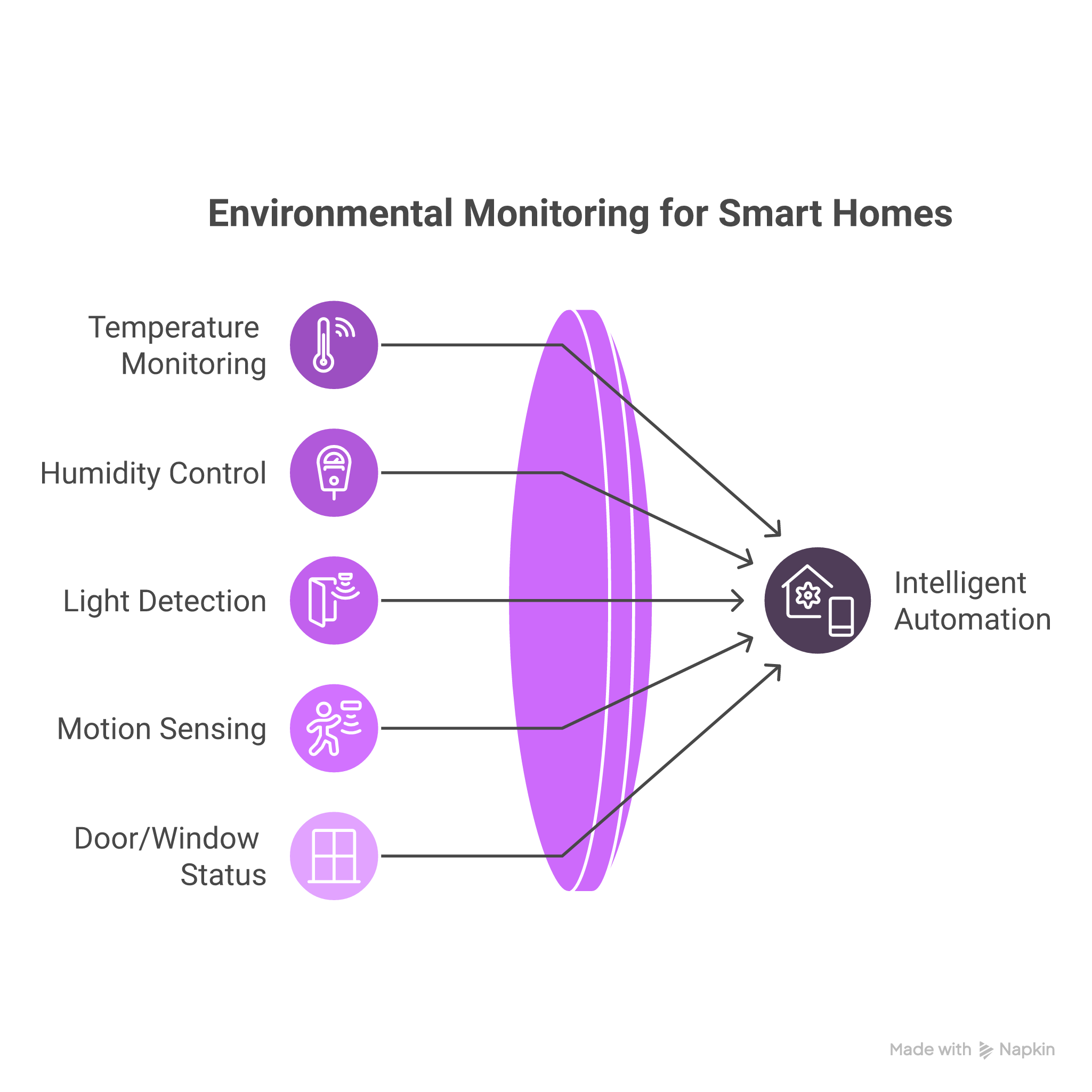
Temperature sensor types have evolved beyond single-function devices to become comprehensive environmental monitoring solutions. Modern multi-parameter sensors combine temperature measurements with humidity, light levels, and motion detection, creating a holistic view of indoor climate conditions that enables more intelligent automation decisions.
2. Protocol Compatibility and Smart Home Integration
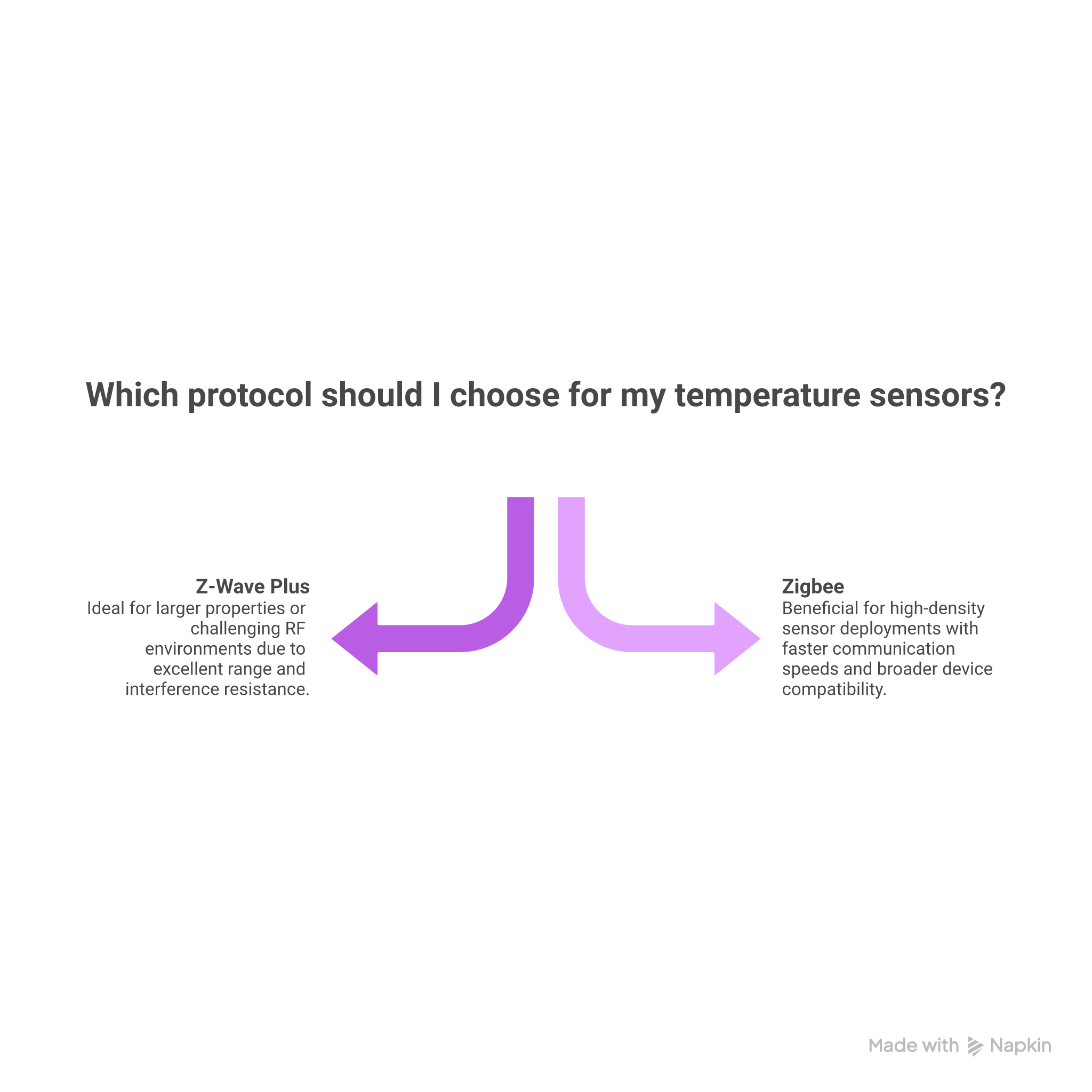
Z-Wave Plus and Zigbee protocols form the backbone of reliable temperature sensor communication, each offering distinct advantages for different installation scenarios. Protocol choice significantly impacts mesh networking capabilities, security protocols, and compatibility with major smart home platforms including Home Assistant, SmartThings, and Hubitat.
Z-Wave Plus provides excellent range and interference resistance, making it ideal for larger properties or challenging RF environments. Meanwhile, Zigbee offers faster communication speeds and broader device compatibility, particularly beneficial for high-density sensor deployments.
3. External Temperature Probe Support and Multi-Zone Monitoring
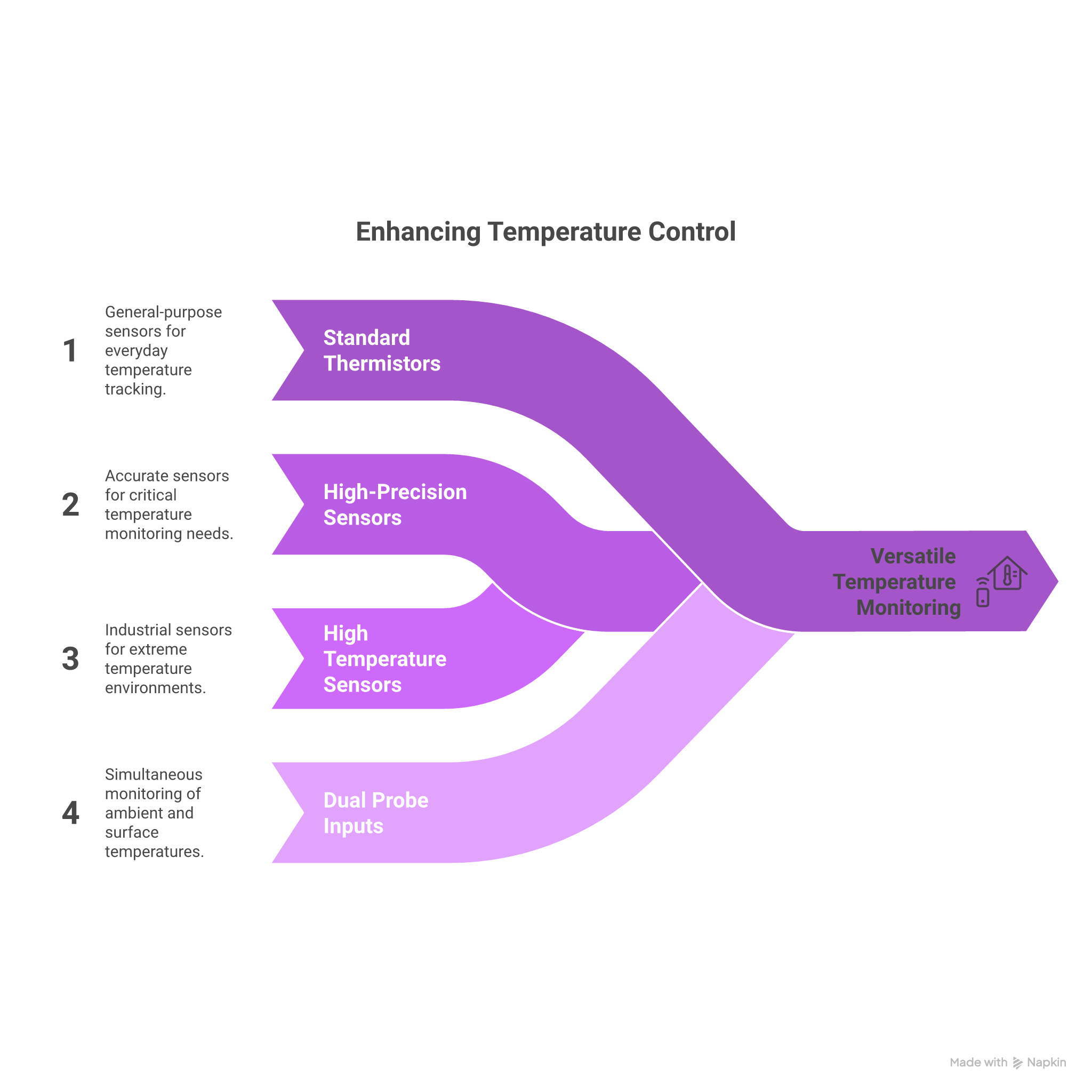
External probe capabilities transform basic temperature sensors into versatile monitoring systems capable of measuring conditions in remote locations or specialised environments. Temperature probe types include standard thermistors for general applications, high-precision sensors for critical monitoring, and high temperature sensors for industrial environments.
4. Precision Control and Customisable Temperature Thresholds
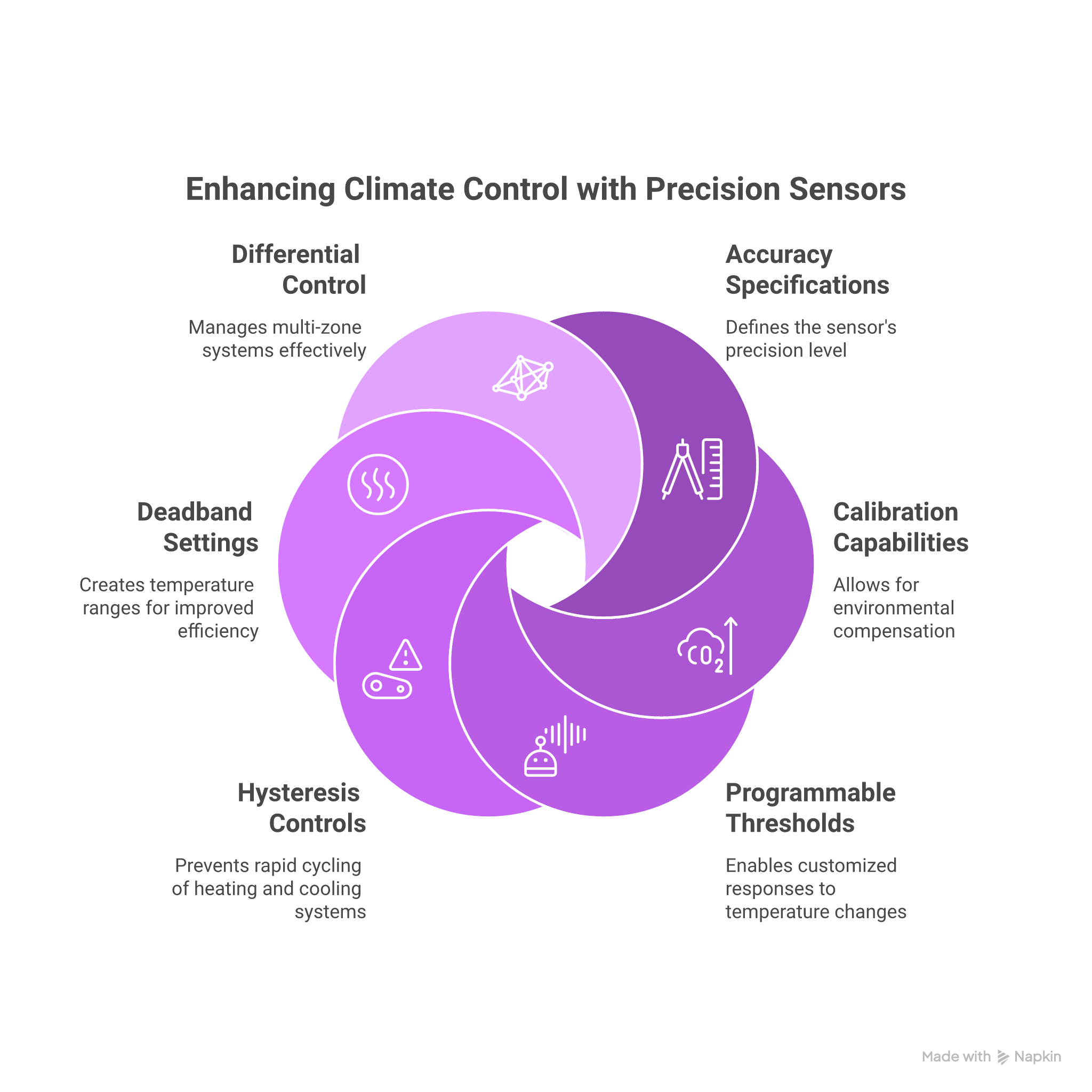
Accuracy specifications and calibration capabilities determine a temperature sensor's effectiveness in maintaining precise climate control. Professional-grade sensors typically offer accuracy within 0.1°C, whilst standard residential units provide accuracy within 0.5°C, both sufficient for most comfort and safety applications.
Programmable threshold settings enable customised responses to temperature events, with hysteresis controls preventing rapid cycling of heating and cooling systems. Deadband settings create temperature ranges rather than fixed setpoints, improving system efficiency whilst maintaining comfort.
5. Real-Time Alerts and Automated Response Systems
Instant notification capabilities ensure immediate awareness of temperature events that could impact comfort, safety, or property protection. Modern temperature sensors can send mobile alerts, email notifications, and trigger automated responses through smart home systems.
Alert and automation options:
- Immediate mobile notifications for threshold breaches
- Automated heating system activation during cold events
- Emergency alerts for extreme temperature conditions
- Scheduled reports for energy management analysis
- Integration with security systems for comprehensive monitoring
Automated response systems can activate heating elements, trigger ventilation fans, or shut down equipment based on temperature conditions. This proactive approach prevents damage whilst optimising energy consumption through intelligent system management.
6. Safety and Fire Protection Integration
Combined temperature and smoke monitoring enhances property protection through early warning systems that respond to both smouldering fires and rapid temperature rises. These integrated solutions provide comprehensive fire detection capabilities whilst maintaining precise climate monitoring functions.
Heat sensing capabilities complement smoke detection by identifying temperature-based fire signatures, particularly effective in areas where traditional smoke detectors may trigger false alarms. Professional fire safety integration ensures compliance with building regulations whilst providing advanced automation capabilities.
Fire safety integration features:
- Built-in smoke detection with heat sensing backup
- Rate-of-rise temperature monitoring for rapid fire detection
- Intelligent filtering to reduce false alarms from cooking
- Emergency system integration for automated responses
7. Industrial-Grade Performance and DIN Rail Mounting
Commercial and industrial applications require robust temperature monitoring solutions that withstand demanding environments whilst providing professional-grade features. DIN rail mounting systems enable neat installation in electrical panels, whilst extended operating ranges accommodate challenging industrial conditions.
Industrial-grade features:
- Extended temperature operating ranges for harsh environments
- DIN rail mounting for professional panel installations
- Modbus integration for building management systems
- Power monitoring capabilities for energy management
- Multiple sensor input support for comprehensive monitoring
These professional solutions often include advanced features like power consumption monitoring, making them suitable for energy management applications. High temperature sensor variants can monitor industrial processes, HVAC equipment, and critical infrastructure components.
8. Battery Life, Power Options, and Long-Term Reliability
Power consumption characteristics directly impact deployment flexibility and maintenance requirements. Battery-powered sensors offer installation freedom but require periodic maintenance, whilst mains-powered units provide continuous operation without battery concerns.
Modern battery-powered temperature sensors achieve multi-year operation through efficient sleep modes and optimised transmission schedules. Over-the-air firmware updates ensure long-term functionality and feature enhancements without requiring physical access to installed devices.
Power and reliability considerations:
- Battery life expectations and maintenance schedules
- Mains power options for continuous operation
- Low-battery alerts and replacement indicators
- Firmware update capabilities for feature enhancements
Our Temperature Sensor Recommendations
Professional Industrial Solutions
For professional installations and industrial applications, the Heatit DIN Smart Thermostat offers exceptional versatility with support for dual external temperature sensors, DIN rail mounting, and advanced features like power monitoring and Modbus integration. This premium solution excels in commercial environments requiring precise multi-zone temperature control.
Comprehensive Home Monitoring
For comprehensive home monitoring, the Philio 4-in-1 Multisensor provides excellent value by combining temperature sensing with motion, door/window, and light detection in a single battery-powered device. Its compact design and multi-year battery life make it ideal for whole-home environmental monitoring.
Water Damage Prevention
For water damage prevention with temperature monitoring, the Aeotec Water Sensor 7 Pro delivers dual-purpose protection by detecting both water presence and ambient temperature changes. This budget-friendly option is perfect for basement monitoring, pipe freeze protection, and HVAC area surveillance.
Safety-Critical Fire Protection
For safety-critical applications, the Heatit Z-Smoke 2 combines smoke detection with precise temperature monitoring and heat sensing capabilities. This mains-powered solution provides professional-grade fire protection with intelligent filtering to reduce false alarms from cooking activities.
Conclusion
Temperature sensors have evolved from simple monitoring devices to sophisticated environmental management tools that enhance comfort, safety, and energy efficiency. The right combination of precision monitoring, smart connectivity, and automated responses can transform your property's climate control whilst providing essential safety protection. Whether you need basic room monitoring or comprehensive multi-zone commercial control, modern smart thermostats offer the flexibility and intelligence to meet diverse requirements.
Start by assessing your specific monitoring needs, preferred smart home protocol, and installation requirements. Consider factors like external probe necessity, battery versus mains power, and integration with existing safety systems. Begin with one or two strategic sensor placements to experience the benefits of smart temperature monitoring before expanding to comprehensive coverage.
Explore Vesternet's complete range of temperature sensors, smart thermostats, and environmental monitoring solutions to find the perfect fit for your project. Our technical specialists are available to provide expert guidance on sensor selection, system integration, and optimal placement strategies for maximum effectiveness and value.